
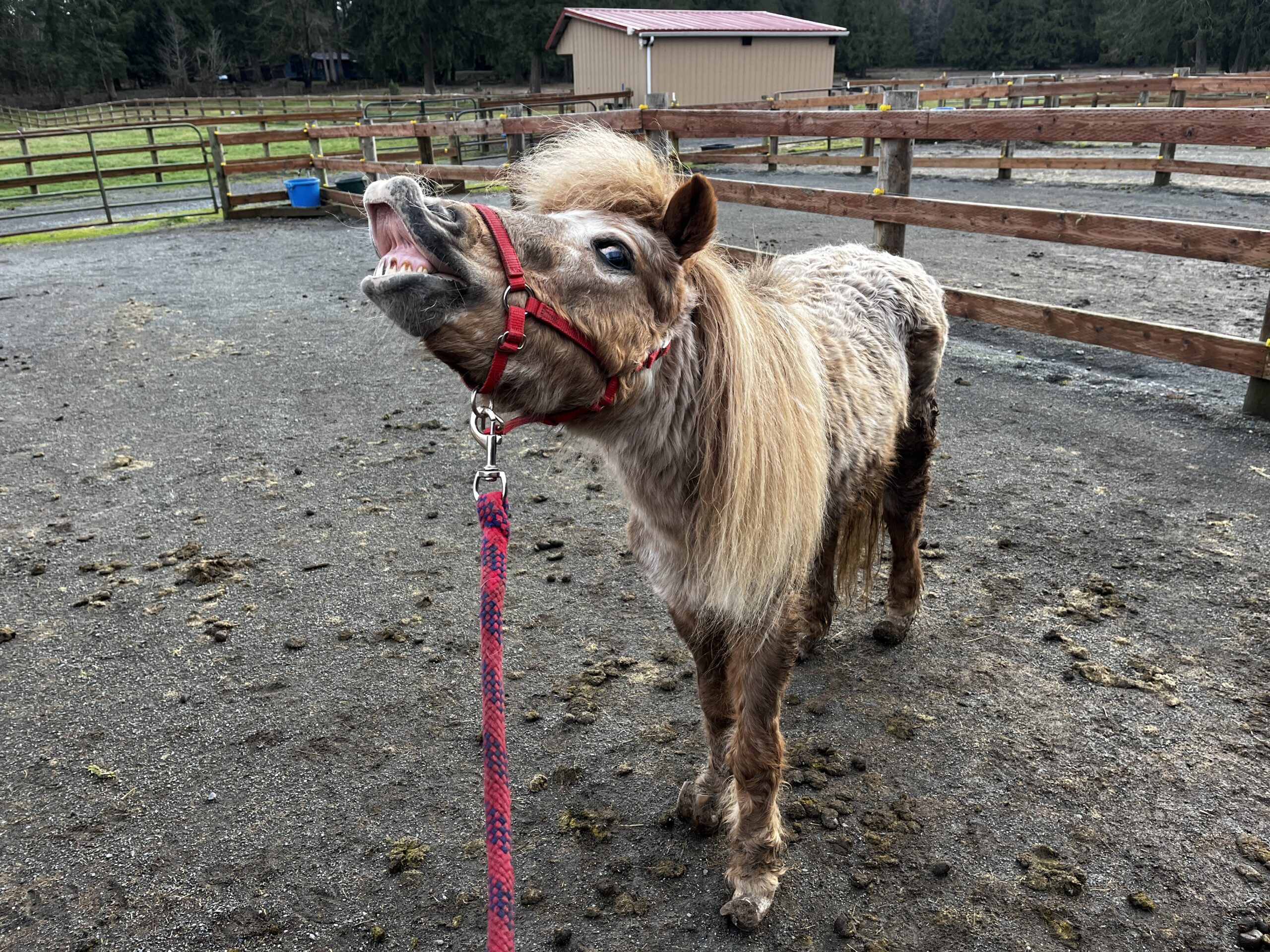
Rella
2009 Miniature Horse Mare
Suitability: Companion
Registered Name: Liahona’s Dreamfred Rendition
Color: Chestnut
Markings: Star, Blue Eye (L)
Height: 38″
Weight: 270lbs
Adoption Fee: $300
Rella, along with her 3 other herd mates, arrived at SAFE in January of 2025 after they landed with a good Samaritan who brought them to our attention. These four little minis were living in squalor, and had pressing medical needs that would have certainly warranted animal control involvement had their previous owner not surrendered them.
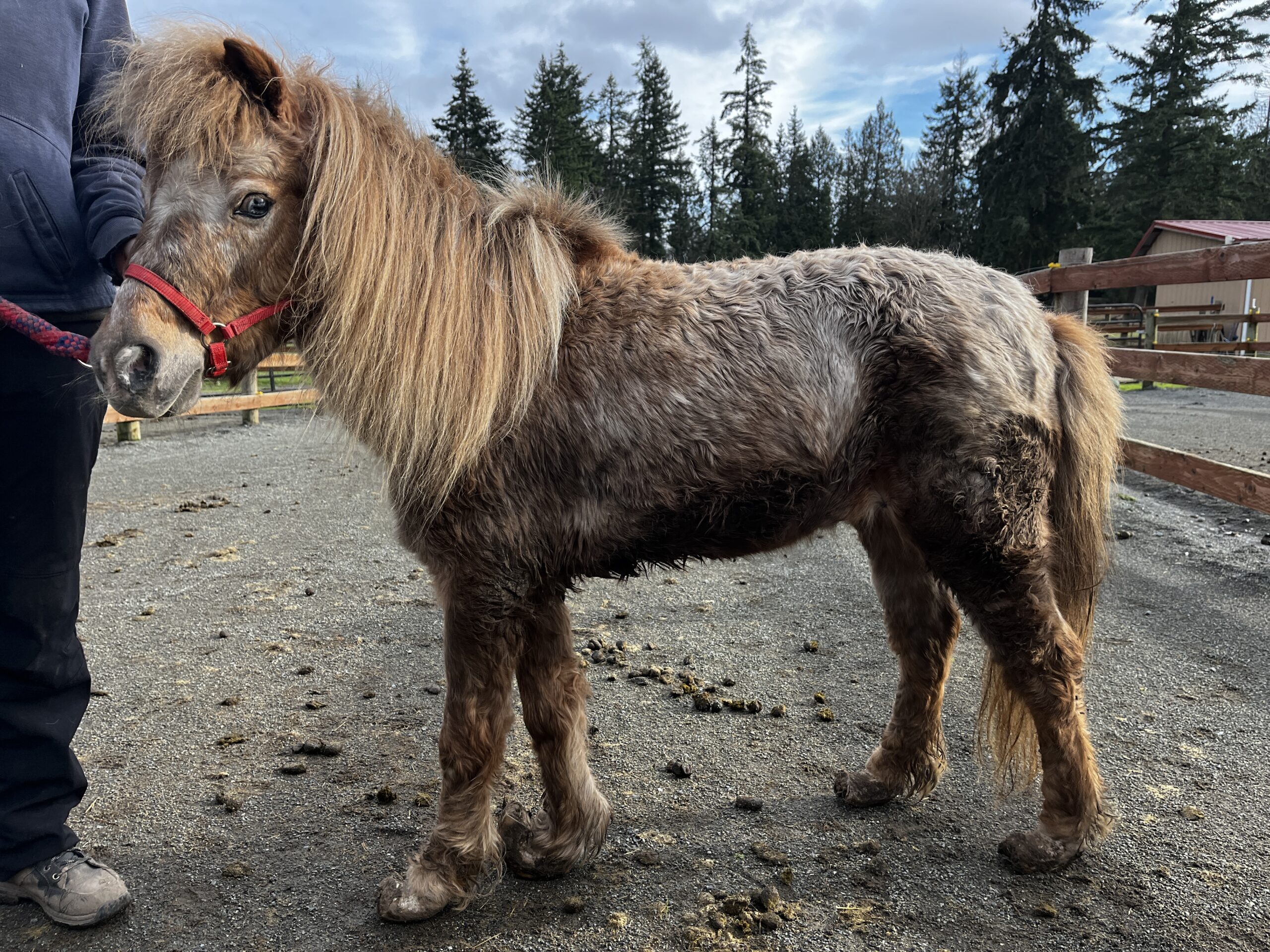
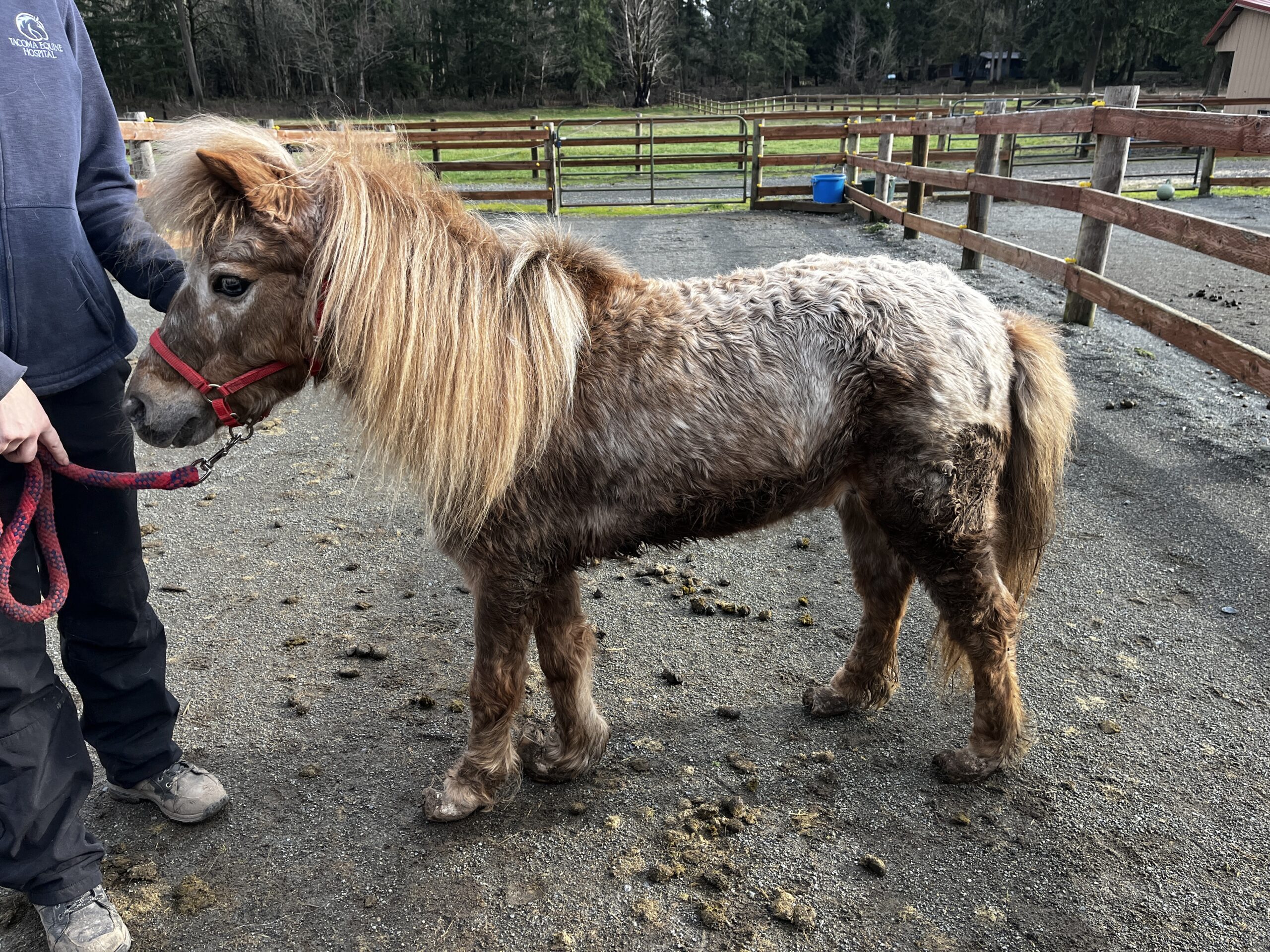
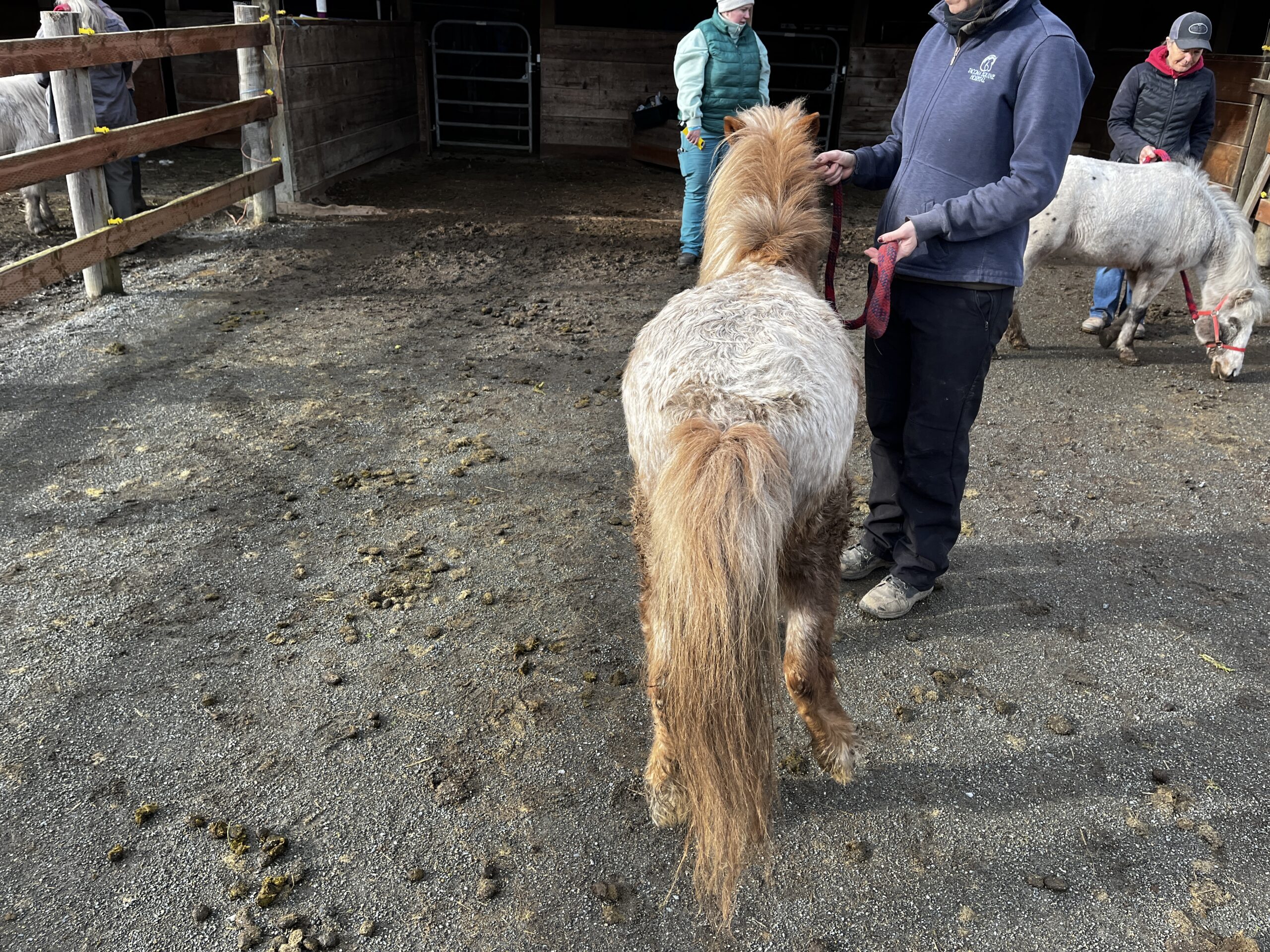
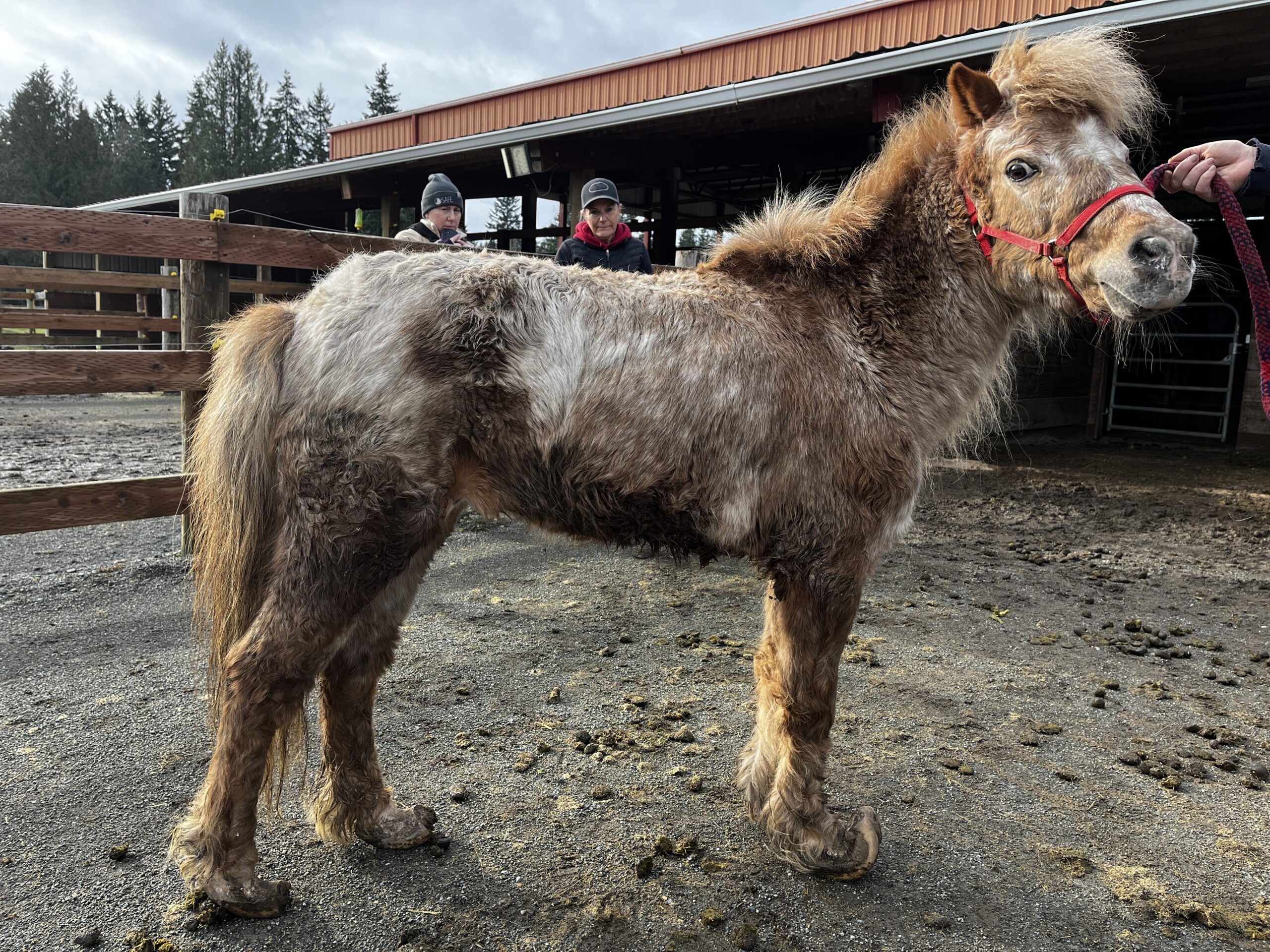
On arrival, Rella’s hooves were so long they had started to curl up onto themselves. Initial radiographs revealed that she had some remodeling of her coffin bones as a result of this neglect. However, the vets believed she had a fighting chance still, and we had our farrier out to see her within days of her intake, beginning her rehab journey.
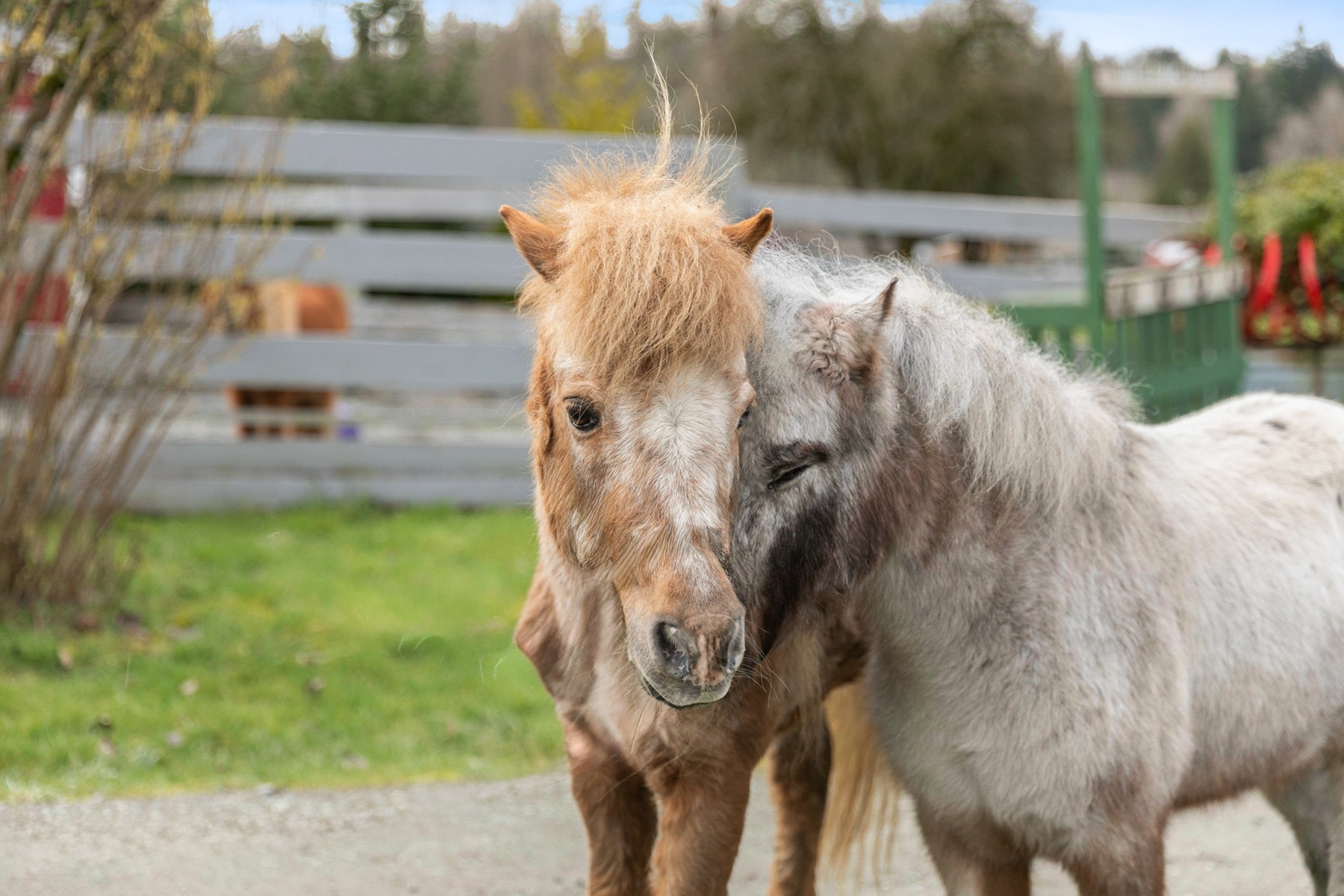
Rella is the shiest of the group, but is making progress towards coming out of her shell and allowing us to gain her trust. As Emery’s half sister, the two are bonded, and never far from each other’s side.
Four Minis: A New Start
Part 2: A new start
The four minis are all registered and came to us with existing names. However, as part of welcoming any new horse to SAFE, we give them a new name to mark the beginning of their next chapter with us.
Our handsome little stud was given the name TeSelle in honor of a kind and devoted supporter of rescue animals — and a dear friend to SAFE — who recently passed away.
The thin, wise older mare was named Jefa, “lady boss” en español, due to her lead mare attitude around the other two mares. But don’t worry, it’s all a front; with people, she is shy and very sweet.
Our sweetest little mare with painful eyes has been gifted the name Emery, an Irish name meaning “brave.”
And our lady with the long hooves — we’re calling her Rella, after Cinderella. Though we’ll be sure she never has to wear slippers again.
In the four weeks they’ve been with us, we have brought them up to date on all their basic medical care and have taken steps toward their longer-term rehabilitation. All the minis have received vaccinations, microchips, and dental floats.
Thankfully, with a little help from our vet, they now have good grinding surfaces. They all had sharp points that were beginning to cause ulceration — a tremendous source of discomfort. Along with the poor-quality hay they were being fed, this was a major factor in their poor condition and malnutrition upon entering SAFE. With just some light maintenance dentals, we were able to remove painful ulcers and greatly improve their quality of life. They can now enjoy their hay, and with quality hay and supplements, they are able to gain weight. It seems like a simple thing, but routine annual dentals can literally be a lifesaver for horses.
Following Jefa’s dental, the vets determined that she should be able to eat hay, a fact that made both her and us quite happy. Her ACTH levels came back as positive for Cushing’s, so we started her on pergolide, and discovered through a bit of trial and error that her vessel of choice is an apple.
TeSelle was gelded. For a shy guy like him, the most difficult part of the surgery was being sedated — but made possible by the kind approach of our veterinarian Dr Lewis from Rainland. The procedure was smooth sailing. With TeSelle being 16 years old there was an elevated risk of complications. Luckily he healed up very well, and was a champion for his forced exercise.
Rella received her first hoof trim — though “trim” hardly does it justice. This was more of a full hoof remodel. Our good friend Lisa Fite had just the right tools for the job and used a saw, rasp, and dremel on Rella’s slipper toes, transforming them into something that actually resembled a hoof again.
To help mitigate soreness, we’ll need to take little bites at a time. We still have some time before her hooves look “normal,” but removing the bulk of the overgrowth was a huge first step. She can now walk normally and even roll and get up without those massive flipper hooves holding her back.
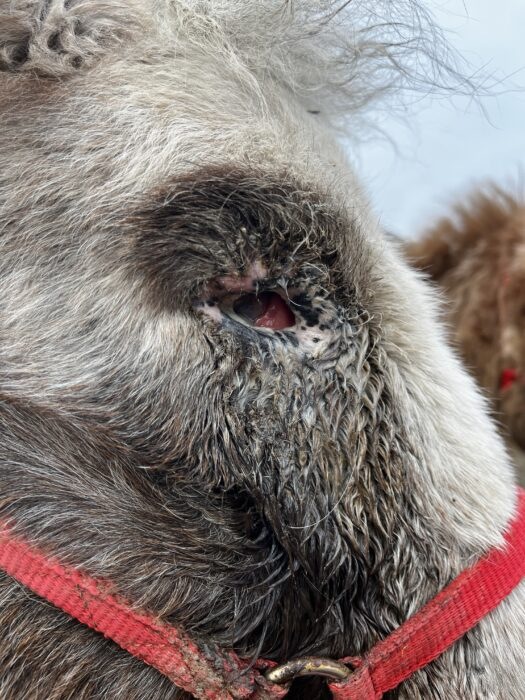
Lastly — and perhaps most significantly — was our dear Emery. Upon closer inspection of her right eye, our vets discovered a great deal of scar tissue surrounding it. Even more concerning, her bottom lashes, initially thought to be missing, were actually curled into the eyeball itself, scratching what remained of her cornea. We don’t know about you, but even one eyelash in our eye is intensely irritating and painful. Now imagine living like that for years.
In SAFE’s 20 years of experience, we’ve seen some very sad situations, but knowing Emery suffered like this for so long feels especially cruel.
We discussed her quality of life with our vets — her ability to live comfortably and get along without sight. These are serious considerations, because the loss of an eye can be very traumatic for a horse, and some do not adjust well. Horses that lose vision suddenly often suffer the most. In Emery’s case, it was clear this had not happened overnight. She had long adapted to the lack of vision on that side, but the pain was undeniable.
After careful consideration for our brave little one, we scheduled a date to remove her right eye. We were grateful to be able to help her out of this unimaginable pain and give her the comfort she deserves. The surgery took place less than a week later, and went very well. She was accompanied for her inpatient visit to Rainland by her half-sister, Rella, for companionship and comfort.
Because of the lack of healthy surrounding tissue for closure, Emery had to remain bandaged for a week longer than was standard, but with frequent bandage changes and antibiotics, she healed up remarkably.
Despite daily treatments, her left eye still has a small ulcer. She is the definition of an angel for her twice daily ointments, which is a blessing considering this will likely be an ongoing part of her care to help keep her remaining eye as healthy as possible.
We are so thankful for the support of our care teams who help make our rescue and rehabilitation of horses like these a reality.
Thank you to our amazing vets at Rainland Farm for their skillfulness, generosity, timeliness, and flexibility. We could not be more appreciative of the hours they spend both directly and indirectly caring for our horses.
And to our hoof care team, who helped get these four little minis back on their feet. Their expertise and patience is invaluable to us, and is literally life changing for the horses they trim.
Now that these four are up to date on their basic care, we are ready to start looking for their perfect matches. We promise them that their happily-ever-after is just beginning, and we know a wonderful family will come into their lives to give them the life they’ve always deserved — filled with love, dignity, and safety.
Four Minis Arrive at SAFE
Part 1: Arrival
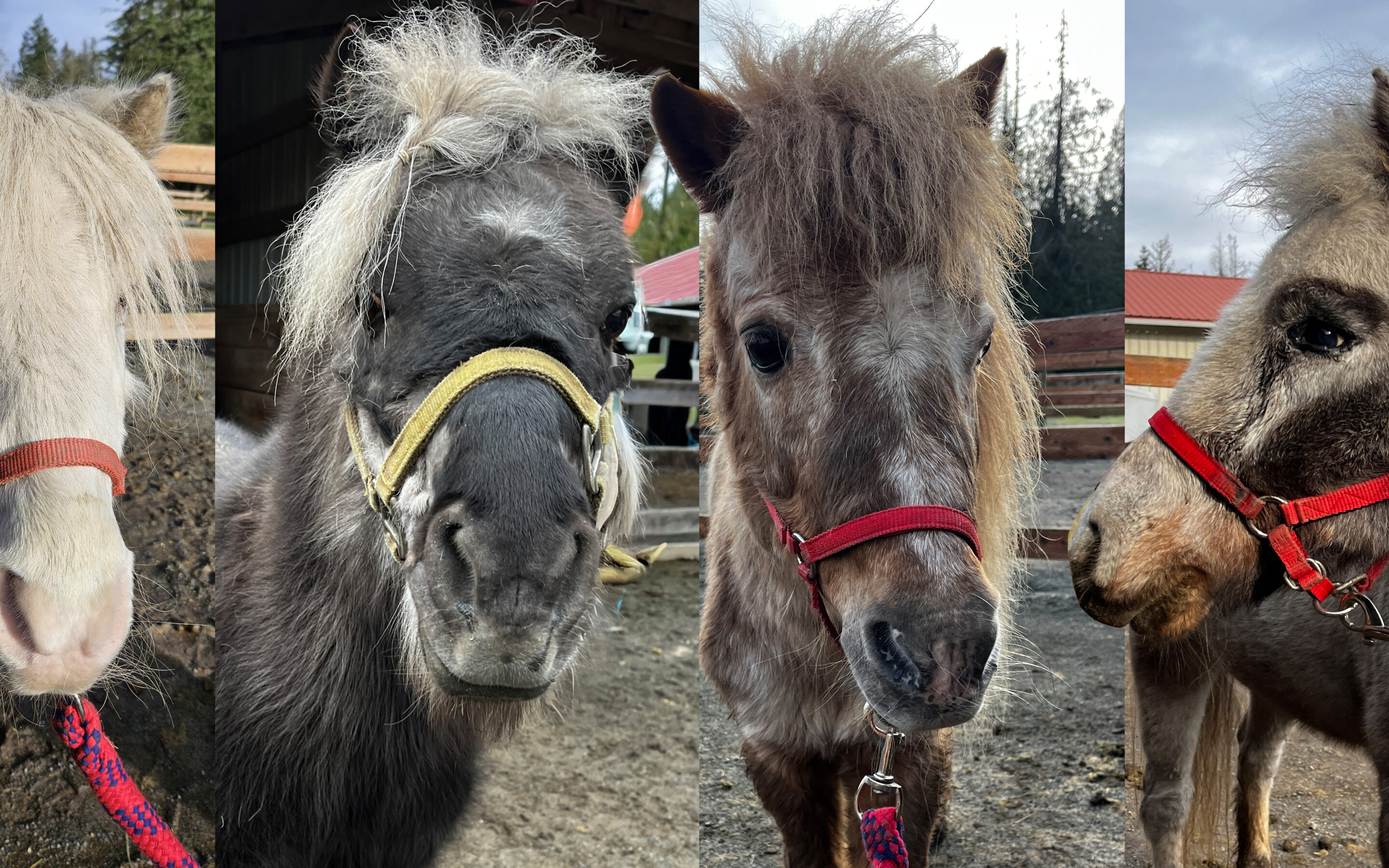
Right around the first of January, we got a call from a woman with a small boarding facility who had been contacted by a member of her community urgently looking for a place to keep four miniature horses. This good Samaritan had agreed to help, believing that she would be taking in a few horses for short-term holding.
But when she arrived where the horses had been living, she stopped short in the driveway. The place was in such poor condition (she used much stronger words to describe it) that she refused to drive onto the property, insisting that they load the horses up on the road.
As the horses were led out to the trailer, one by one, their conditions went from bad to worse.
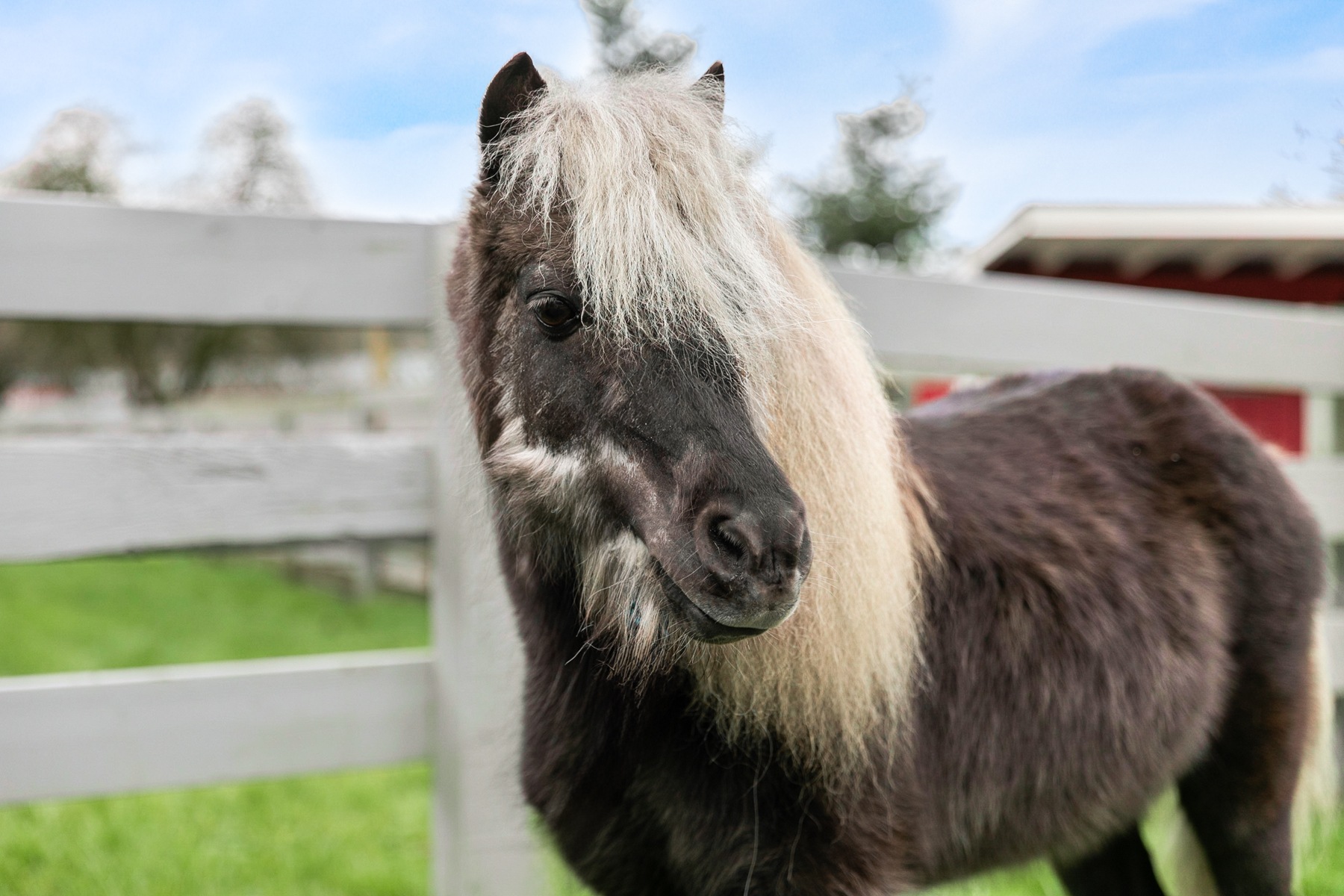
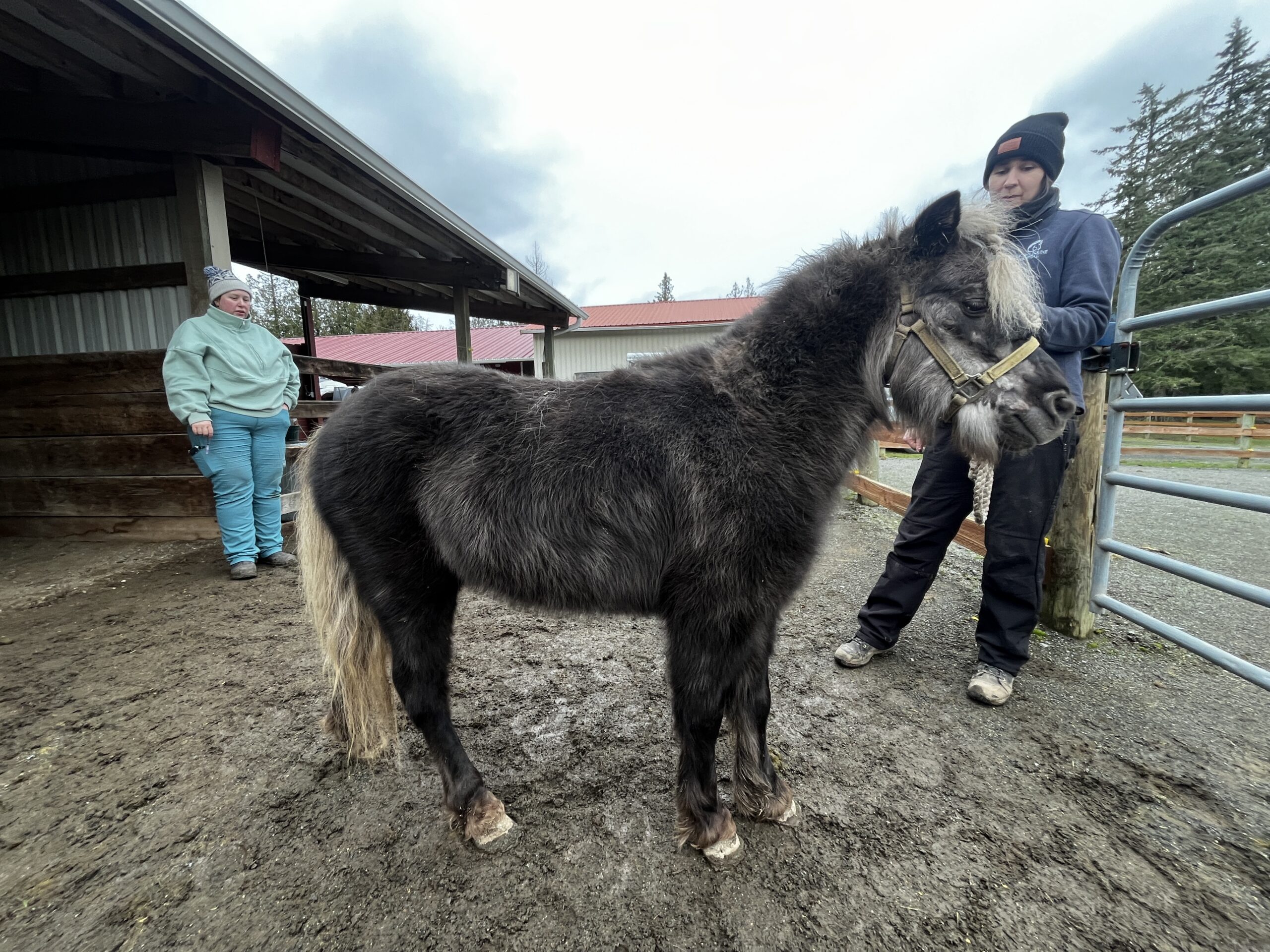
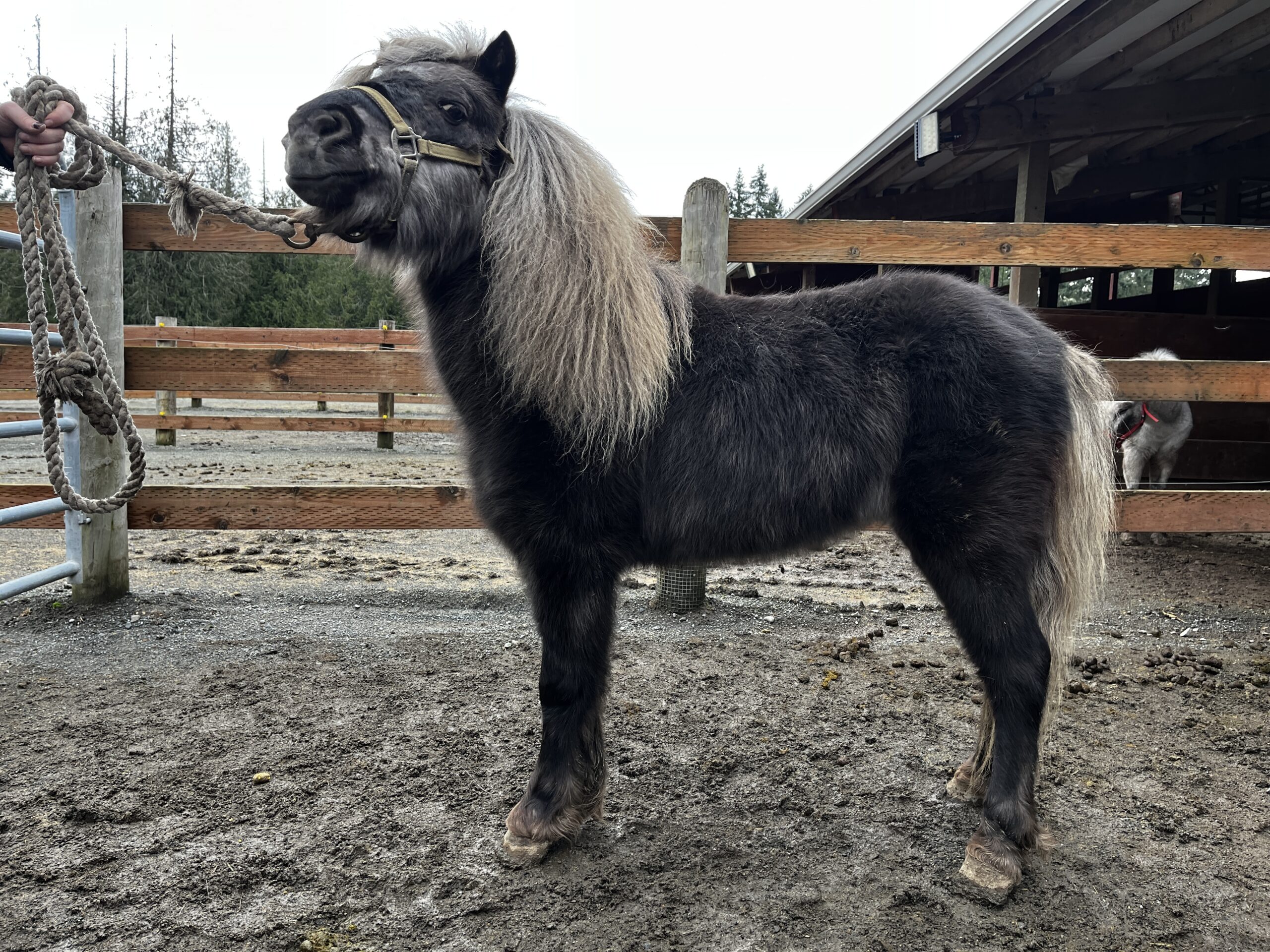
First was the only boy of the group, a stallion. Smokey grey, with a flaxen mane and tail. He had big bald swaths on his face, patches of dry, hairless skin punctuated with the occasional scab. His hesitation in getting onto the trailer was so great that he leapt atop the back of the individual attempting to load him, an event that luckily did not result in any serious injuries.
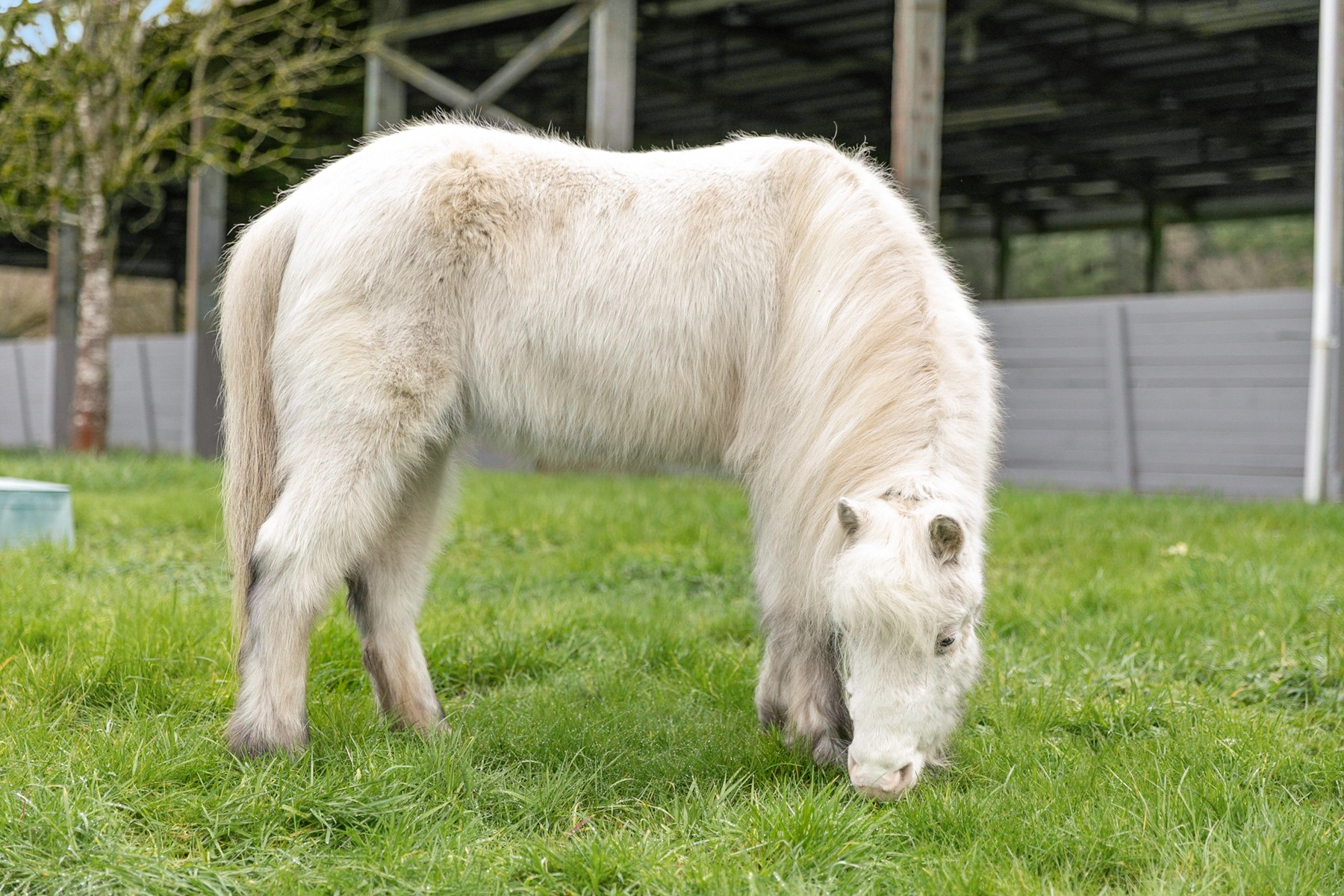
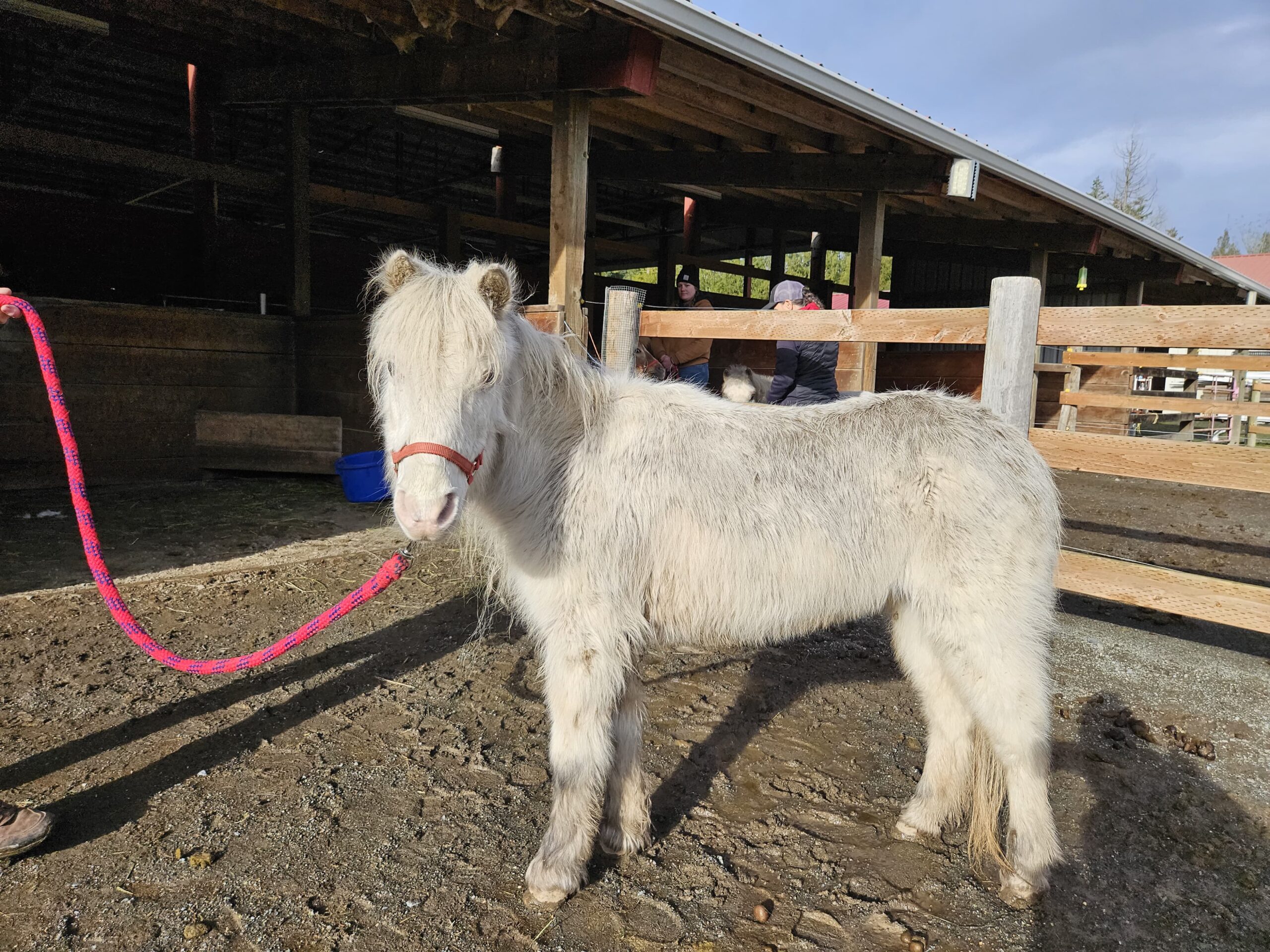
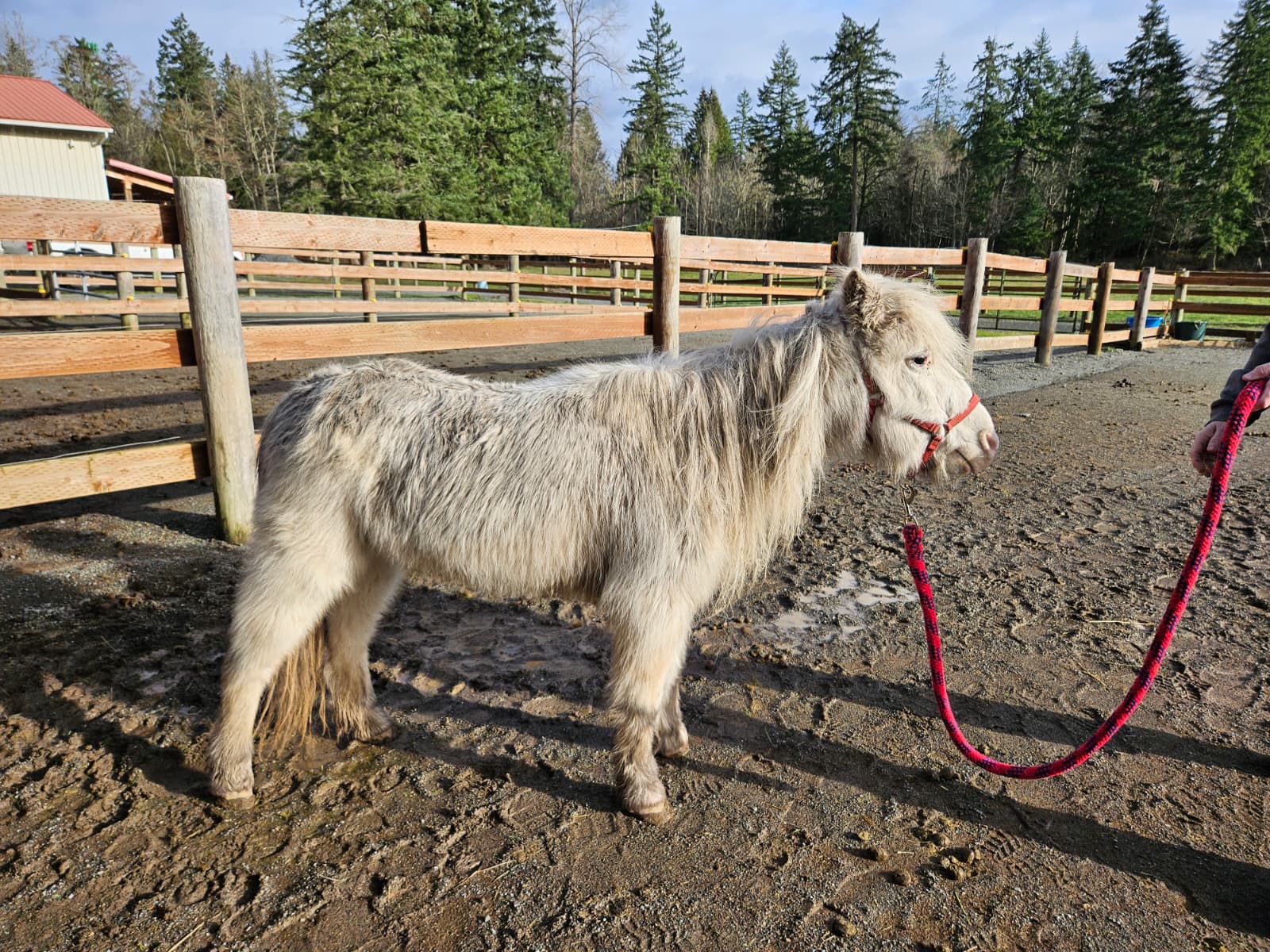
Next came a white mare whose fluffy winter coat hid her ribby body, one the vets would later classify as a 2/9 on the body condition score chart. The tip of her white tail drug along the ground, as scraggly as the rest of her. As she walked to the trailer, the good Samaritan noticed how painful her steps appeared, as if she was walking on broken glass.
Then another mare came up to the trailer. She was the smallest of the group, and easily the sweetest, which makes her condition all the more shocking. Her left eye squinted and teared, but it was the right eye that drew your attention first. It sat, sunken and small in the socket, leaking foul smelling pus that had been there so long it had crusted down her cheek. She moved cautiously, but without a lot of distress or confusion. Her (relatively) sure-footedness spoke to just how long she had been living with this painful, vision-impairing condition.
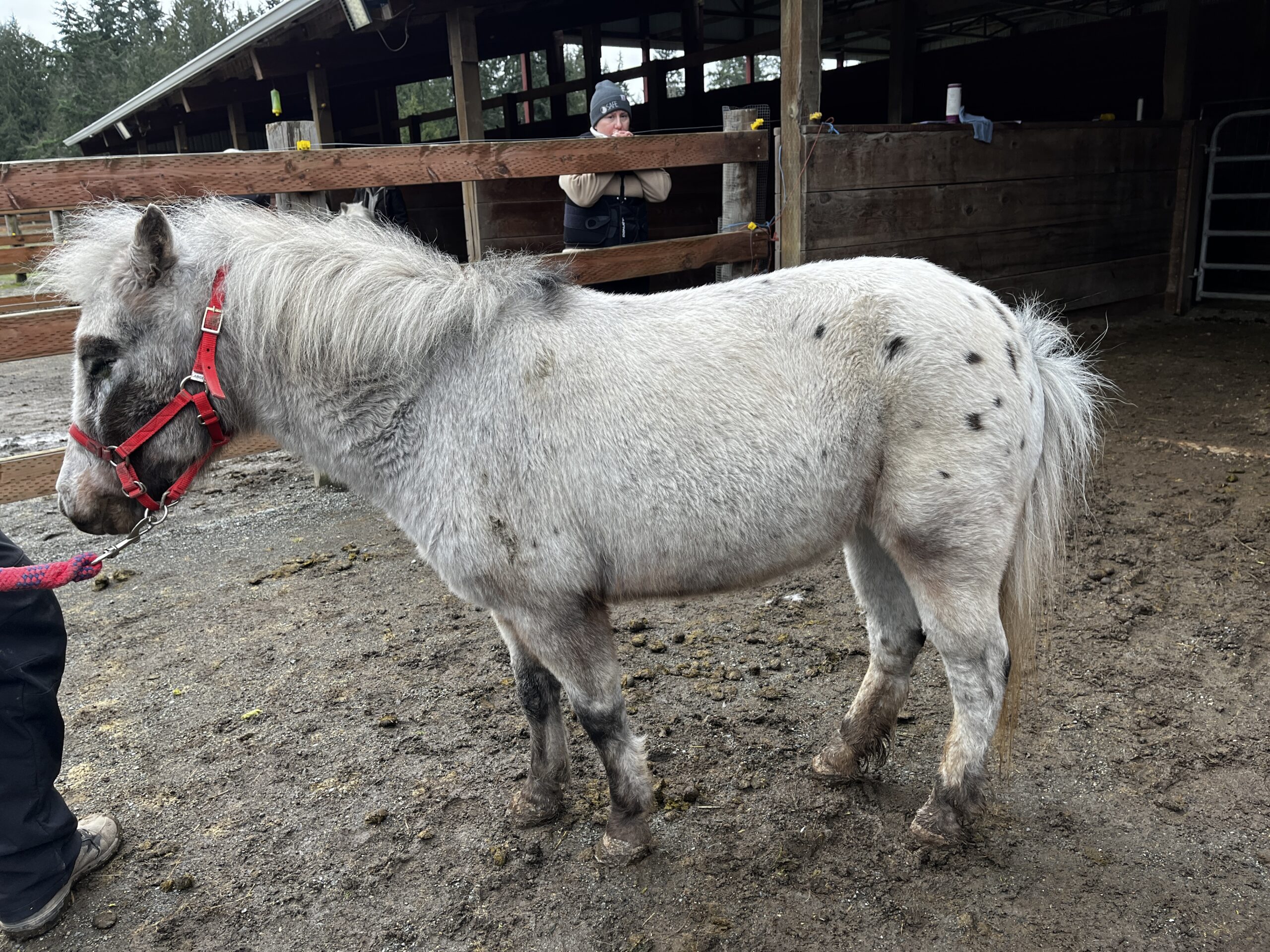
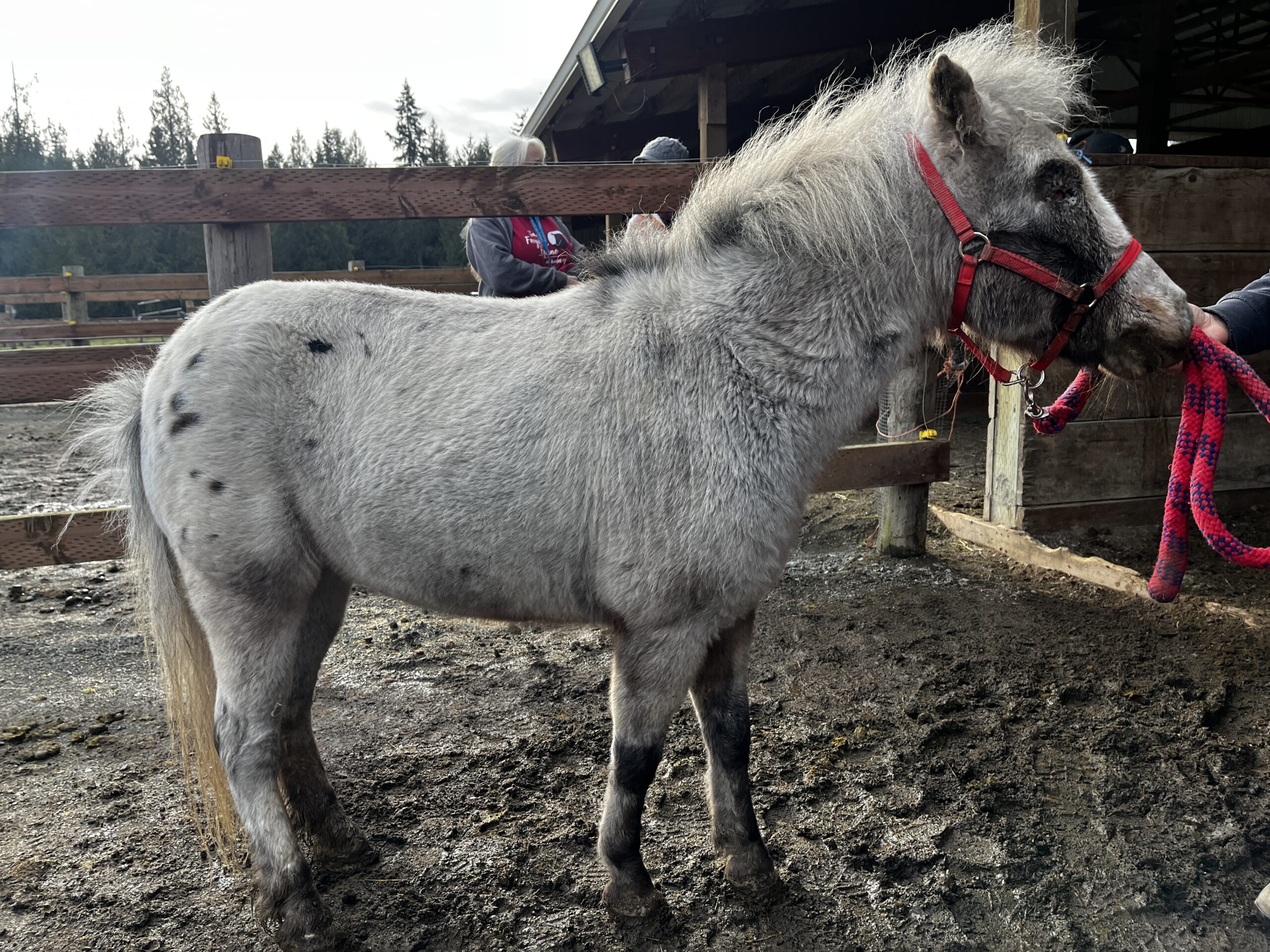
Last came a red mare, who we would later learn was the small mare’s half sister, and bonded friend. To only look at her top half, you would see a nervous, disheveled little horse, same as the others. It wouldn’t be until you inspected her bottom half that you would see the shock of her neglect — hooves left so long they had begun to curl up in front. It appeared as though someone had taken a saw to them at one point, indicating horrifyingly, that they had once been even longer. But the majority of their immense length had remained, changing her gait and her physiology.
After bringing these animals to her place, our good Samaritan gave their owner an ultimatum: she either sign the horses over to her, or she was going to get animal control involved. Thankfully, there was not much of a fight, and once the horses were in her custody, she reached out to us.
We mobilized to get them to SAFE as soon as possible. Our first call was to Tacoma Equine to help us triage before we transported them. With horses in such bad shape, we always get a veterinarian to evaluate and determine what the most humane next step would be for each of them. Having this professional assessment of the condition helps us start their recovery as well as determine if any are in so much pain that transport would be unkind. Based on what we already knew, we were hopeful, but understood that we might not be able to bring all four back to SAFE with us.
Dr Valerie and her assistant did a phenomenal job in assessing the condition of all four horses, and getting them started on the treatments they so desperately needed. We also had Dr Valerie take blood samples for the three mares to check for Cushing’s on the older two, as well as a Complete Blood Count (CBC) to assess their overall health status. We also tested all three to ensure none were pregnant.
They vaccinated the stallion with tetanus, preparing him for the gelding he would be quickly scheduled for once at SAFE. The little guy was nervous, quivering and jumping even at their gentle, patient touches, and we knew that one of the main focuses for him would be helping him gain confidence and comfort around people.
The skinny mini mare needed to be placed on a refeeding program — a mere 7lbs of hay a day — to help her gain the weight that she was missing. An examination of her mouth revealed sharp points and a foul odor, which meant ahead of her dental, we would need to refeed her with mash or the ever so palatable (if not labor intensive, for those preparing) alfalfa chaff.
The small, vision impaired mare allowed all kinds of inspection of both her eyes, both of which were determined to have chronic uveitis. The vet was of the almost immediate opinion that the right eye was in need of enucleation, and if we could have taken it out then and there, we would have, based on the stench of the infection alone. The left eye she examined and stained, discovering ulceration, which she dispensed medicine for.
In addition to her eyes, her hooves were very short and tender. The plan is to improve her condition with dry-bedded stalls, turnout on soft footing (avoiding gravel or rock), and topical treatments such as venice turpentine to help harden the hooves and address any fungal infections. All very easy and manageable things that align with good horse care.
It was for our little red friend we worried the most. Hooves like hers don’t grow overnight, and the reality of what living with hooves like those does to a horse’s anatomy is at best, manageable, and at worst, unlivable. She was incredibly nervous, and required a very patient, quiet touch to allow us to sedate her for the radiographs we needed to understand what we were working with. Her small buddy accompanied her to where they had set up the x‑ray station, and stood patiently nearby as we peered under the hood.
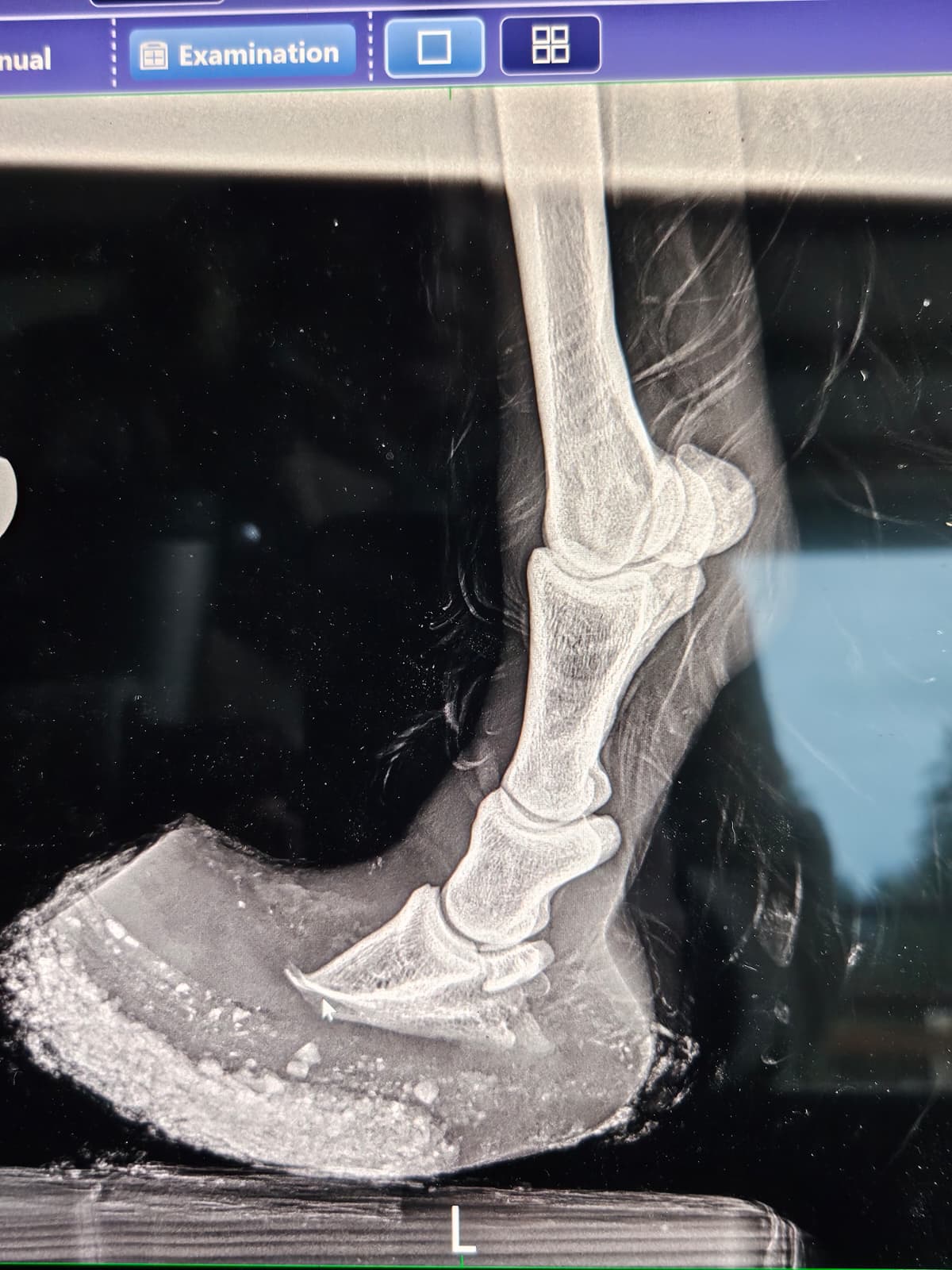
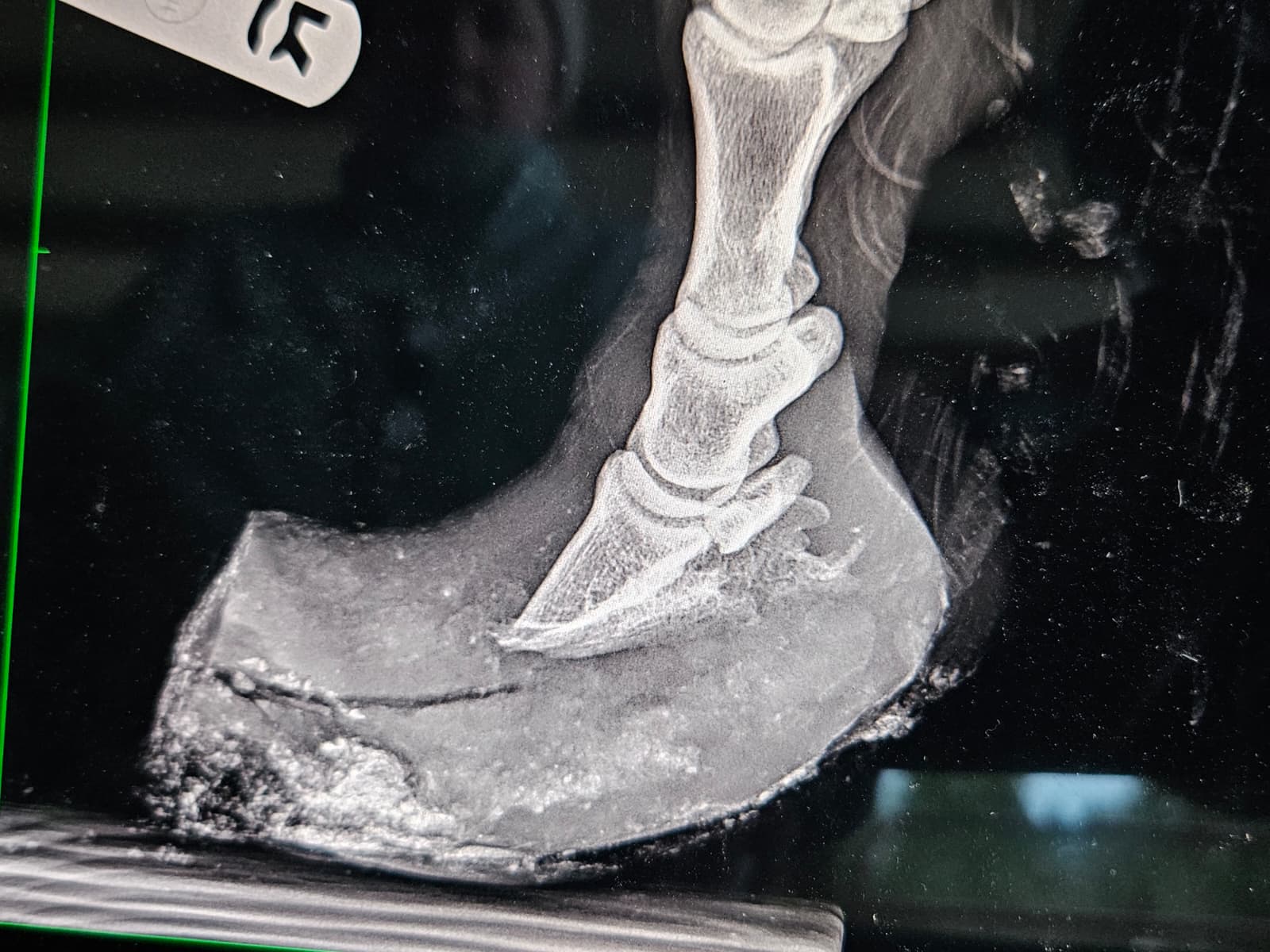
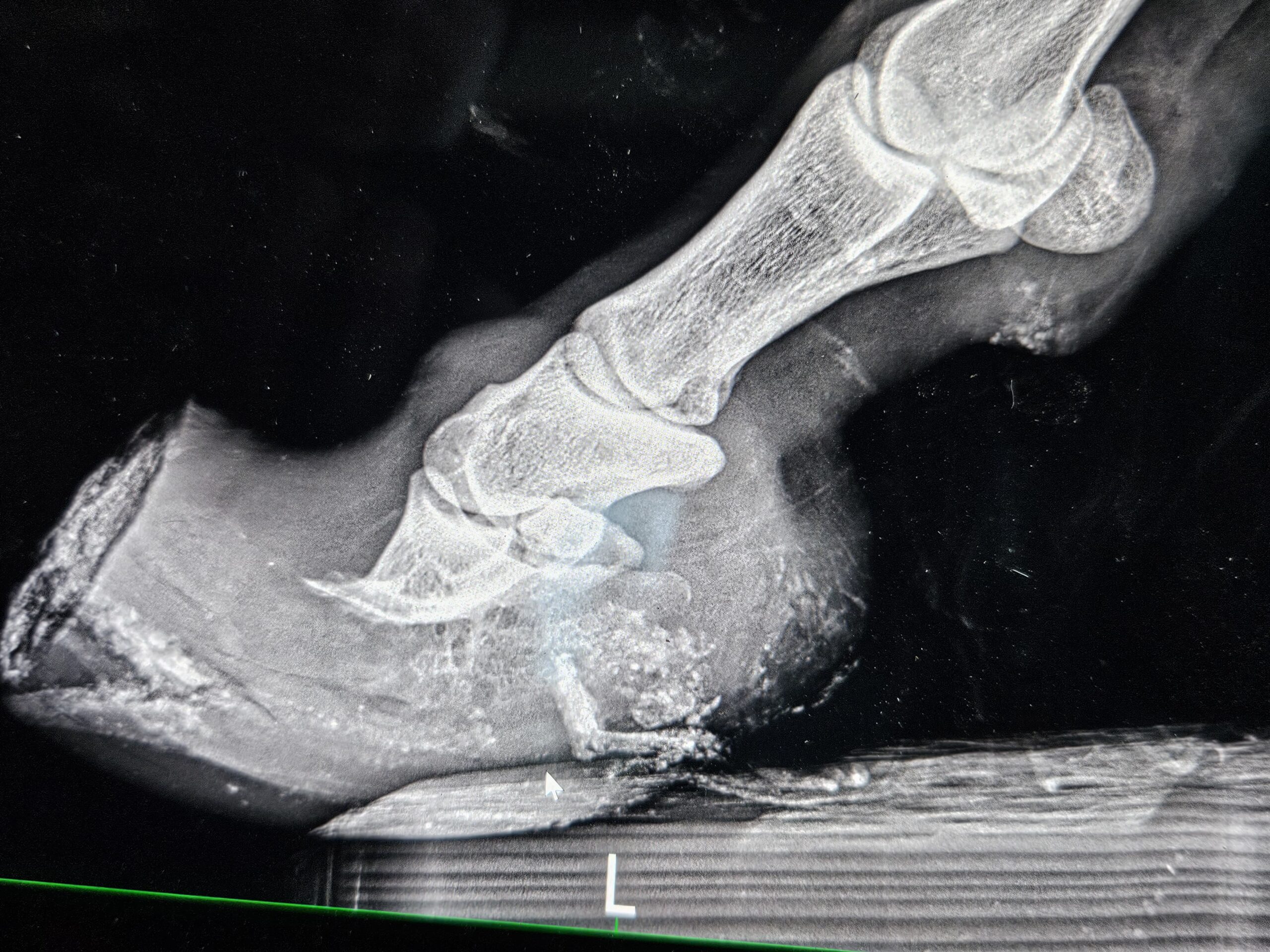
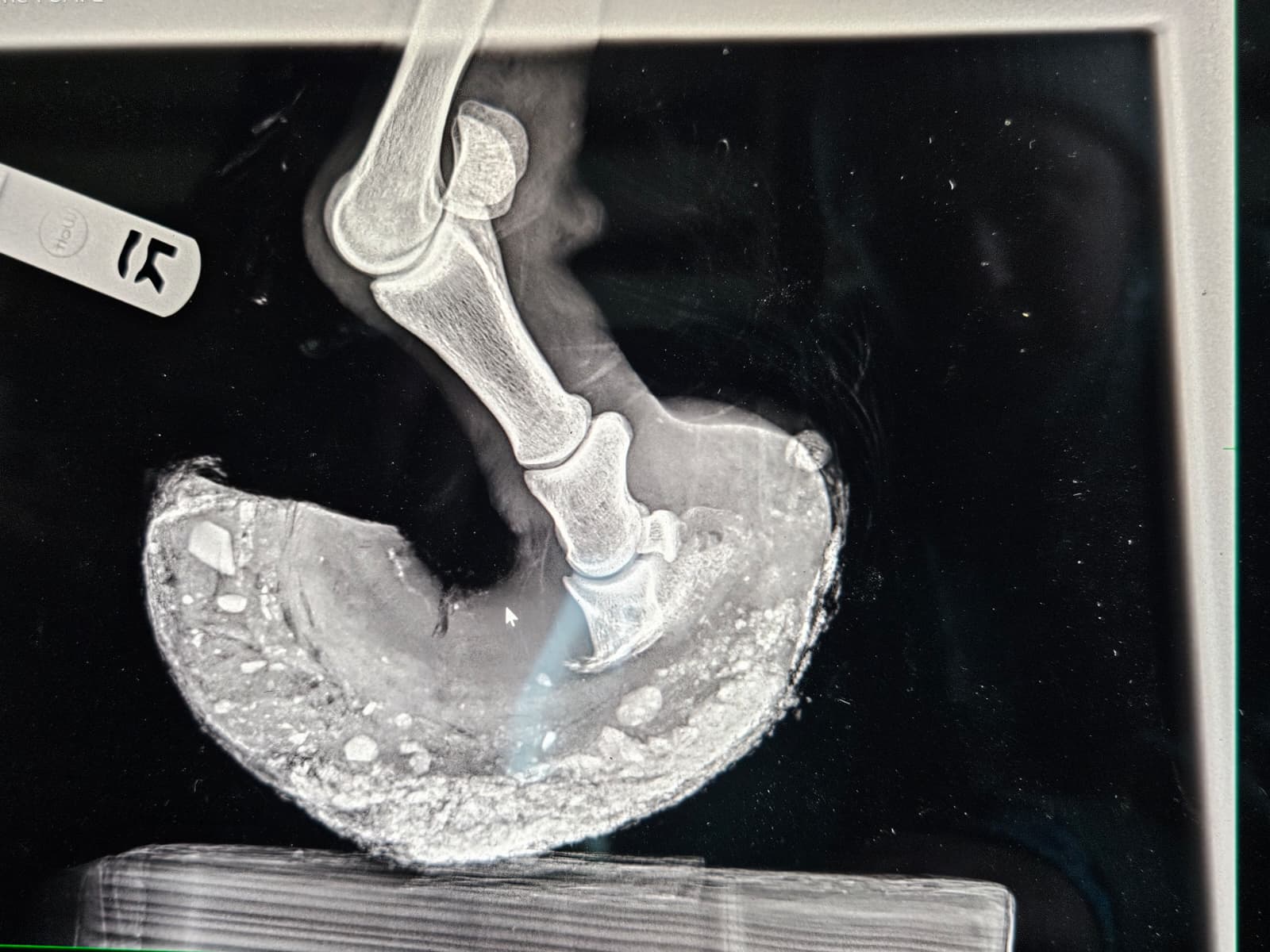
The films revealed the depth of damage that walking on imbalanced, overgrown hooves for extended periods can do. The tips of her coffin bones were remodeling, and her hooves were severely unbalanced, with a long and deep abscess track in one of her hinds. Despite these findings, the vet was of the opinion that it might be possible to keep her and her friends comfortable with significant rehabilitation, and that all four horses were fit enough to join us back at SAFE.
They arrived at SAFE on a Thursday evening, and settled quickly into bedded stalls, pre-loaded with hay and fresh water for their arrival. The next day, we built out a run to our arena to give them turnout space quarantined away from the rest of our herd. A bonus was that the footing was soft, a consideration we wanted to make for our long hooved girl.
We gave the horses a few days to settle into their new spaces, but had booked vet and farrier appointments for days after their arrival. It would take time to rehabilitate these four horses, and we held those with more delicate conditions with cautious optimism about the viability of their futures, but one thing was certain: they were safe now.
Follow along for part two of the story, where we introduce the minis with their new SAFE names, and take you through the next steps of their care with us.
Rella’s Friends:
1. ______________
2. ______________
3. ______________
4. ______________
5. ______________
6. ______________
7. ______________
8. ______________
9. ______________
10. ______________
Every horse deserves at least ten friends! Even a small monthly donation can make a difference.
Click here to sponsor Rella!
