
Wilma
2000 Molly Mule
Suitability: Companion
Color: Brown
Markings:
Height: 13.1hh
Weight: 600lbs
Adoption Fee: 300
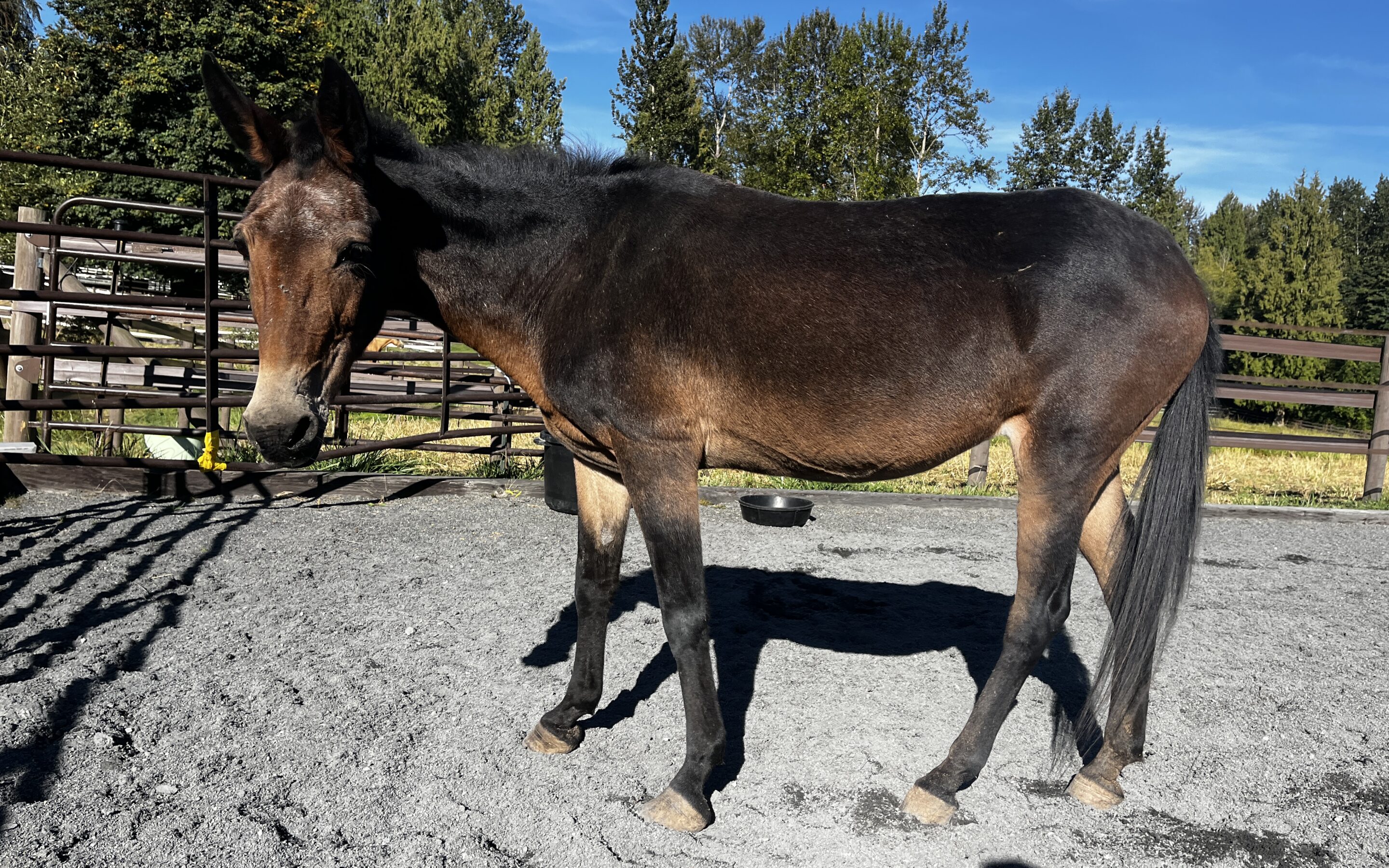
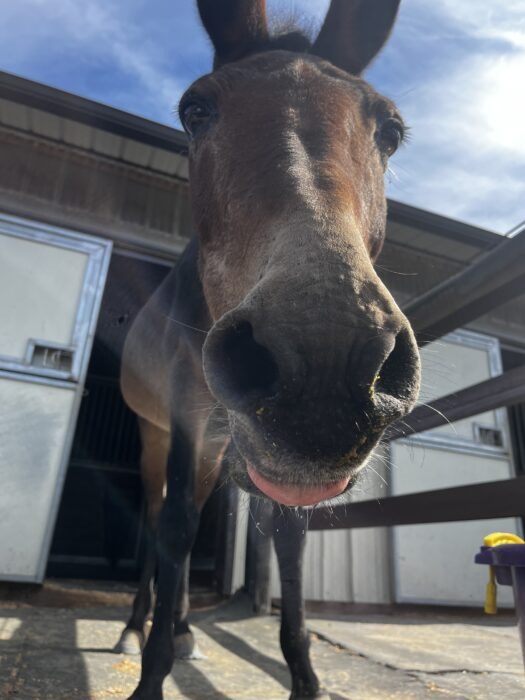
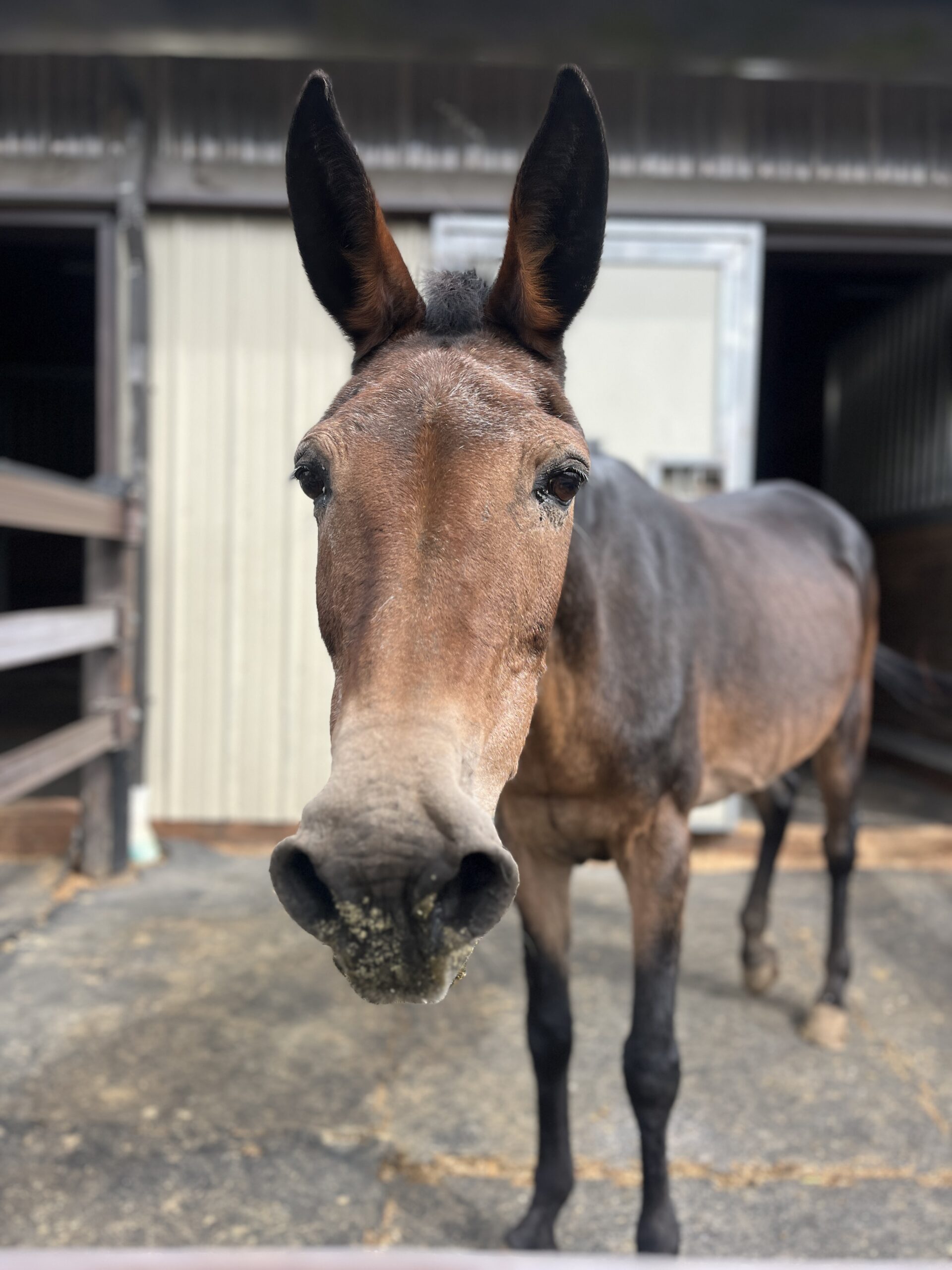
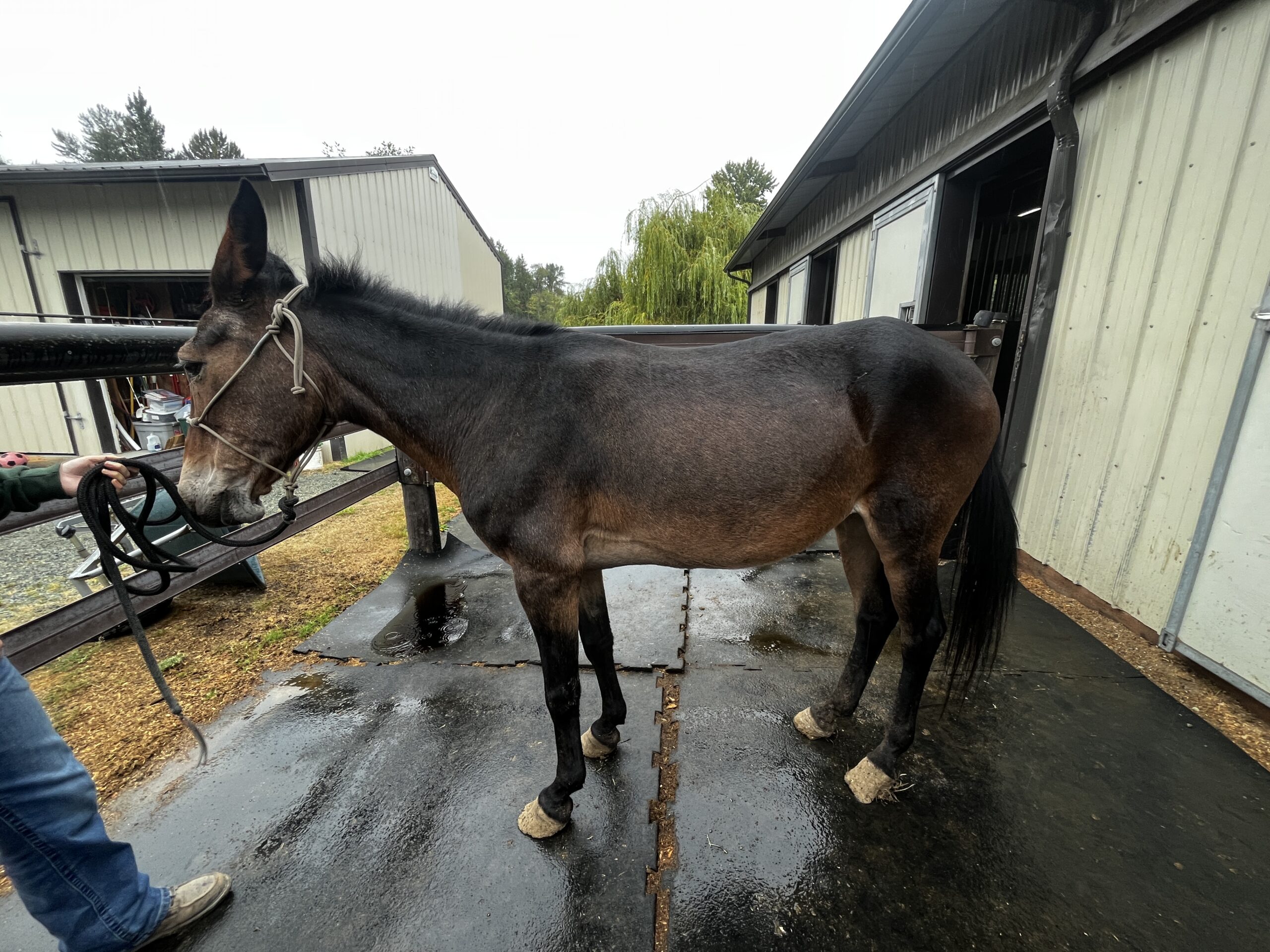
Wilma is an approximately 25-year-old little lady who immediately stole everyone’s heart. With her long ears and her sweet eyes, it is hard not to love this girl.
As we get to know her, we’re looking forward to her future: a loving home where she can spend her golden years as a cherished companion, being appreciated for exactly who she is.
A Tale of Teeth (Wilma)
Wilma arrived at SAFE to a chorus of oohs and aahs — it’s not every day that we get to save a forgotten long-eared equine.
Our visual checks on intake clued us in to her most pressing care needs: long hooves, visible ribs. But it wasn’t until we offered her a welcome snack that we were made aware of what would become the focus of this story: her teeth.
You see, Wilma immediately quidded her hay. When a horse, er, sorry, equine, quids, it means they are not able to fully chew their food, resulting in compacted hay balls. If you’re lucky, they leave these balls behind, like little wet easter eggs where the surprise inside is only more wet hay. But if you’re unlucky, they swallow this half-chewed mass, and if you know anything about equine anatomy, any kind of blockage doesn’t often pass without a fight.
So, much to Wilma’s dismay, we put her on a mash-only diet, effective immediately. Much to our dismay, Wilma told us, in no uncertain terms, that her tastes were particular and picky, and she would not be satisfied with the simple feeding program we had cooked up for her. No, Wilma wanted variety. She wanted texture. And so for the first several days after her arrival, we troubleshooted — different kinds of grain, different ratios of water. We are wholly opposed to feeding dry pellets at SAFE (foreshadowing…), but when the sweet mule lady is braying sadly at you and turning her nose up time and again at your nice, fluffy mashes, you think: “well, maybe if we just add a liiiitle bit of water…”
Cue our fabulous, eagle-eyed night check volunteers ringing us up. Wilma’s standing in her stall, green gunk coming out of her nose. The partial mash had been more partial than mash, and Wilma had managed to take too big a bite. Luckily our vet was quick on the scene, and despite some antics Wilma inherited from her donkey side (the good ole “I’m outta here” move… iykyk), she allowed us to help her pass the choke. Unfortunately, she had aspirated a bit of that food, which means for the past week we have been keeping a very close eye on our sweet new friend, administering antibiotics and keeping close track of her vitals twice a day.
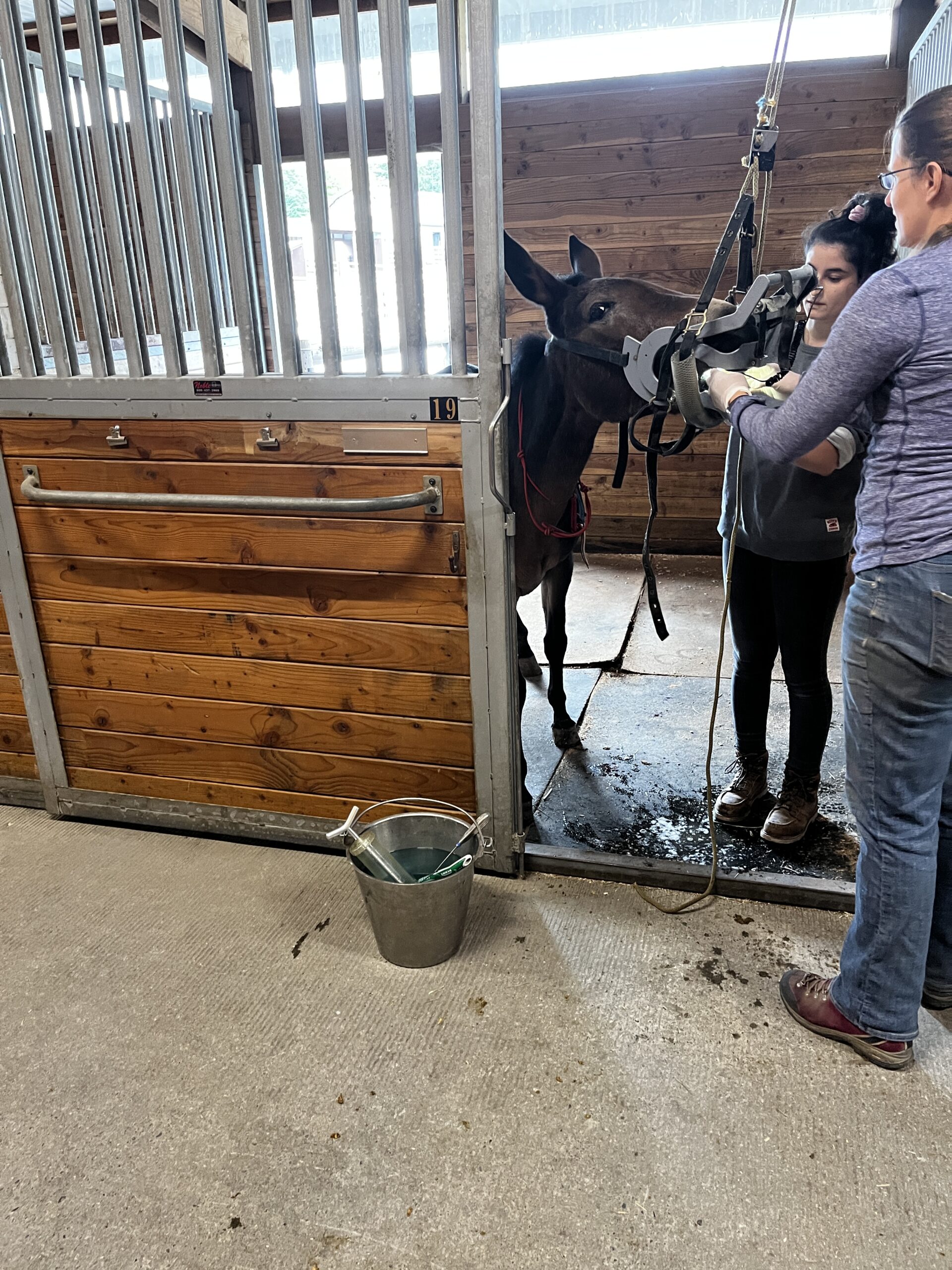
Fortunately, Wilma has been on the mend, and her appetite has been returning as well, even for the mashes she was once turning her nose up at. This progress also meant that we were able to have her seen for a dental float to get an idea of what is going on under the hood.
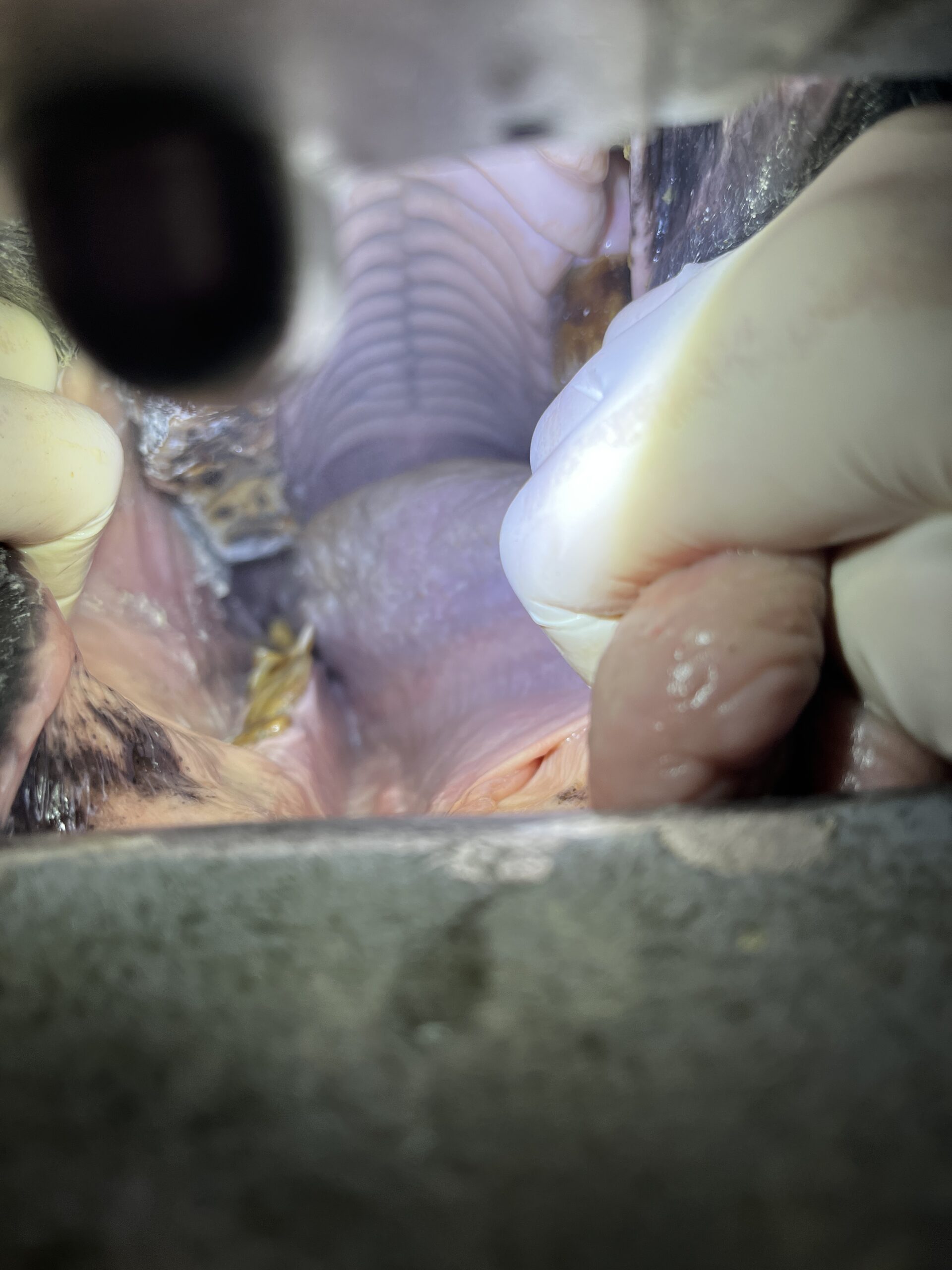
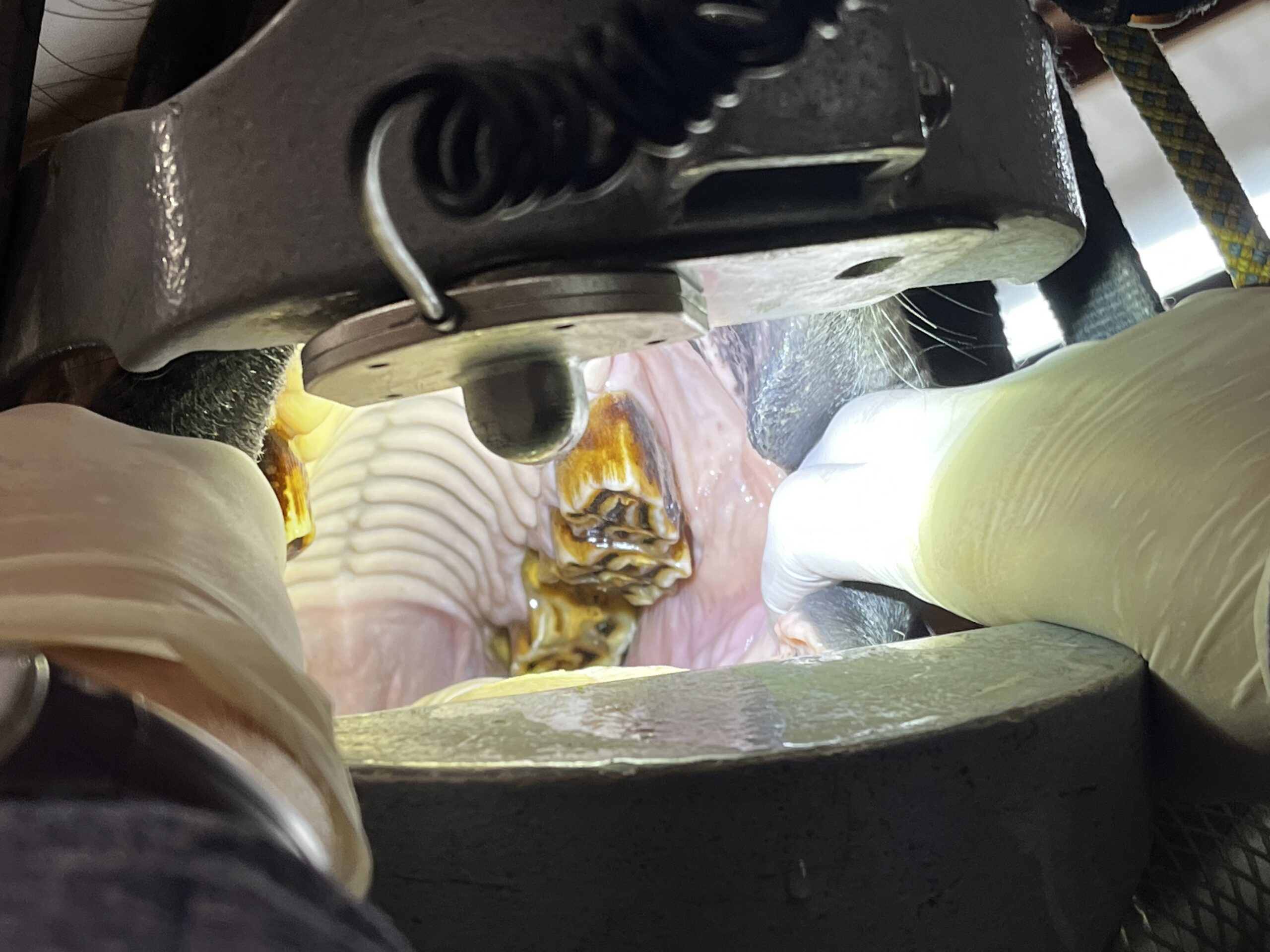
Wilma had a severe wave mouth, one that could put the biggest swells in Hawaii to shame. In addition, her bottom molars were worn almost completely down. Though our vet was able to restore some of her grinding surface, it is not up for debate: Wilma will need an all mash diet for the rest of her life.
Luckily, she has landed on a grain she seems to like (knocking on wood as these words are written), and she is still allowed to enjoy some very short grass grazing, which is bringing her a lot of joy. You know what’s bringing us joy? getting to take care of this special little lady.
Welcoming Wilma and Stanley
Sometimes horses come to SAFE through a very public crisis. Other times, our involvement happens a little more quietly.
Recently, Animal Control was responding to a situation involving a number of equines. While we can’t share details about the ongoing cases, Animal Control and the owner reached the conclusion that, for some of the animals, the best path forward was to transition them into rescue.
That is where SAFE came in.
When we are asked to help in a situation like this, we don’t simply load horses onto a trailer and drive away. Before we agree to take animals, we take the time to understand what is happening on the property, what resources are available, and what plans are being made for the animals who will remain. Our goal is to make sure that removing a few horses doesn’t simply move animals from one crisis into another—or leave behind more animals without the resources they need.
In this case, two equines needed our help right away.
Meet Stanley.
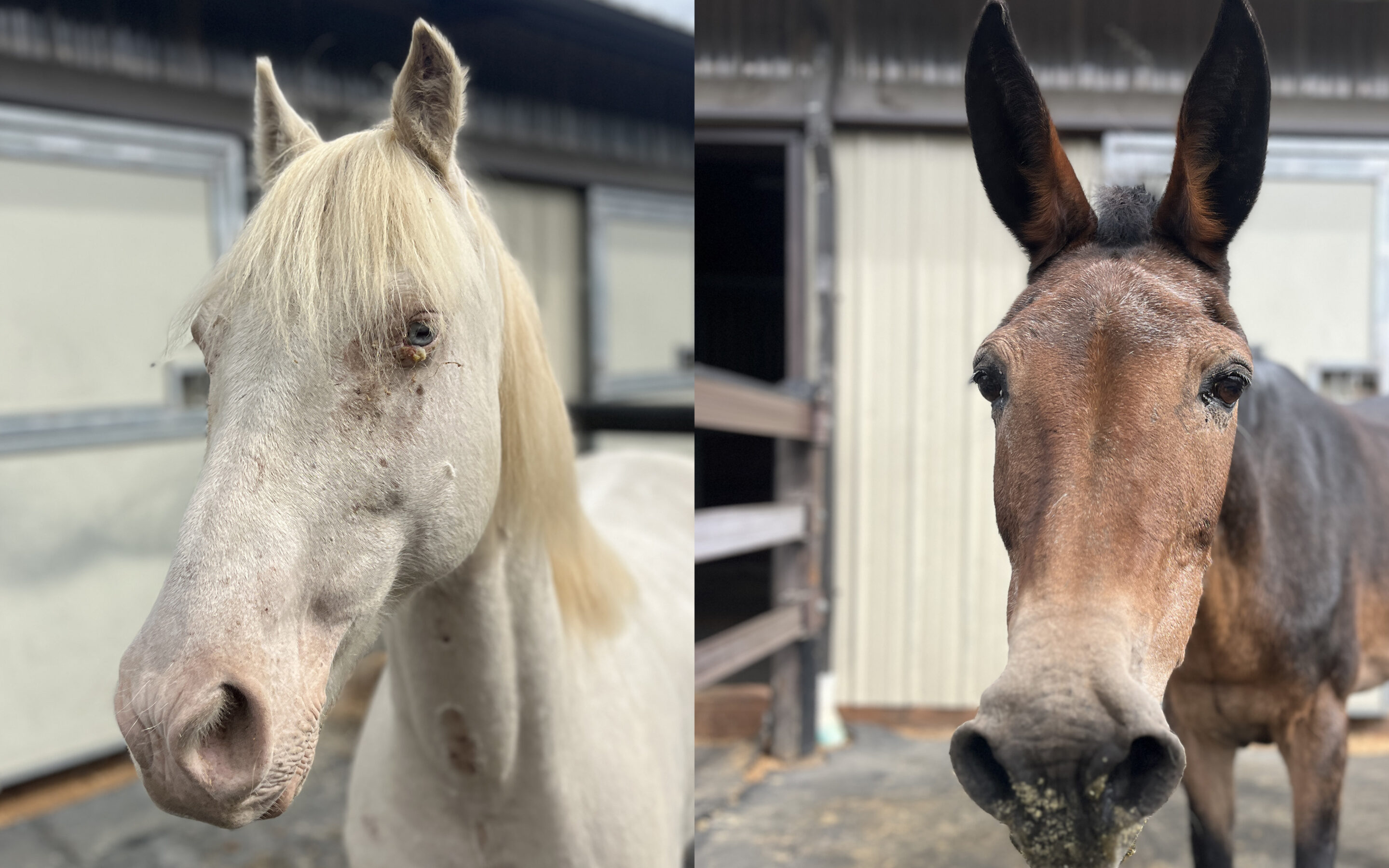
Stanley is an approximately 8‑year-old gelding with the sweetest personality. He is a beautiful Cremello horse with blue eyes and originally came from a Yakima-area kill pen/auction feedlot.
Animal Control had identified Stanley as one of the horses needing veterinary attention that his owner was not currently able to provide. Our veterinarians will be evaluating him right away, including taking a close look at an eyelid that needs attention.
Stanley also arrived with significant skin irritation, scabs, and itching consistent with insect allergies/sweet itch. For a horse who is already uncomfortable from insect bites, living in areas with heavy fly pressure can make things even worse. One of the simple but important things we can provide at SAFE is a clean, dry, comfortable place to get out of the bugs—especially overnight. Stanley has already started antihistamine therapy, and we’ll use additional topical treatments as needed to help his skin heal.
Stanley also has a very upset GI system right now. His tail is saturated with loose stool, and once he is comfortable enough to allow us, he will need a very thorough tail bath.
For now, we’re starting him on a diet designed to help settle his digestive system. Once he is stabilized, we’ll gradually work on increasing his hay intake. Thankfully, he is enjoying his alfalfa hay, eventually cleaning up his grass hay, and absolutely licking the bowl clean after his soaked hay pellet mash.
He is halter-started, and we have some indications that he may have been saddled and ridden in the past. He is also quite reactive, so we’re going to resist the temptation to rush him. Right now, Stanley’s job is simply to settle in, learn that people are going to listen to him, and discover that life at SAFE can be predictable and safe. Once he is feeling better and we’ve had time to evaluate him, we’ll determine what kind of future he might enjoy.
And then there’s Wilma.
Wilma is an approximately 25-year-old little lady who immediately stole everyone’s heart.
And those EARS!
Wilma was described to us as a jenny, or female donkey, but after getting a closer look at her, we suspect she may actually be a molly mule. We’ll let our veterinary team weigh in, but whether she’s a donkey, a mule, or simply Wilma, one thing is certain: she is absolutely adorable.
She’s also incredibly sweet and gentle.
Wilma’s most immediate needs are her feet and her teeth.
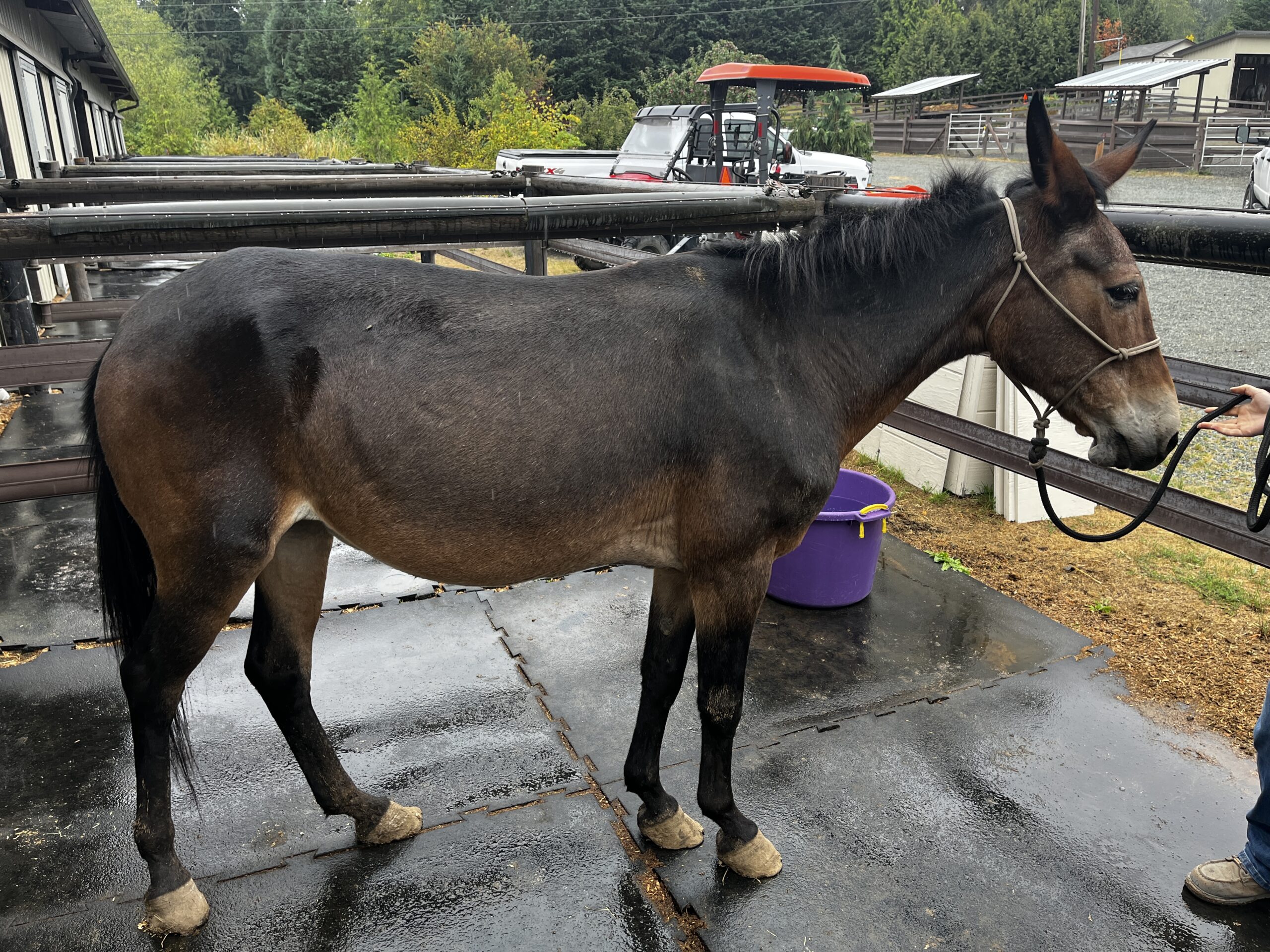
Her hooves are tremendously overgrown and show evidence that she has gone quite some time without regular farrier care. She has been doing some self-trimming, but there are significant quarter cracks and extremely long toes. When we picked up her feet to assess them, we also found significant thrush and deterioration of the frog tissue.
So Wilma’s treatment started immediately: a clean, dry stall, daily hoof cleaning, and treatment for the fungal infection. She and Stanley will see our farrier next week. Wilma allowed us to pick up all four feet yesterday—although she was understandably more cautious with her hind feet—which gives us hope that we’ll be able to make significant progress with her feet very soon.
We also noticed that Wilma was leaving her hay behind. At her age, and with an unknown dental history, that raises an important concern: if a horse can’t properly chew its food, there is a risk of choke and inadequate nutrition.
Until our veterinarians can evaluate her teeth, Wilma is getting her nutrition in a form that is easier for her to manage. She is enjoying soaked senior feed and hay pellets in multiple small meals throughout the day. Once she is out of quarantine, she will still be able to graze on pasture, but depending on what we learn from her dental evaluation, she may always need a soaked mash as part of her diet.
These may sound like small things—clean water, a dry stall, daily hoof care, appropriate nutrition, protection from insects—but for a horse coming from a situation where those basic needs haven’t consistently been met, they are the beginning of a completely different life.
And that’s what rescue is about.
For Stanley, we hope there may eventually be a future as a riding horse. But first, we need to get him healthy, comfortable, and confident.
For Wilma, at approximately 25 years old, we’re looking toward a different kind of happily ever after: a loving home where she can spend her golden years as a cherished companion, being appreciated for exactly who she is.
Both Stanley and Wilma are in an evaluation period right now. Our veterinary and farrier teams will help us understand what they need medically, and our staff will spend time learning who they are and what they are capable of.
For now, they are safe.
They have clean water.
They have appropriate food.
They have soft, dry places to rest.
They have people watching over them.
And they have a future.
Welcome to SAFE, Stanley and Wilma. We can’t wait to see what comes next.
Wilma’s Friends:
1. ______________
2. ______________
3. ______________
4. ______________
5. ______________
6. ______________
7. ______________
8. ______________
9. ______________
10. ______________
Every horse deserves at least ten friends! Even a small monthly donation can make a difference.
