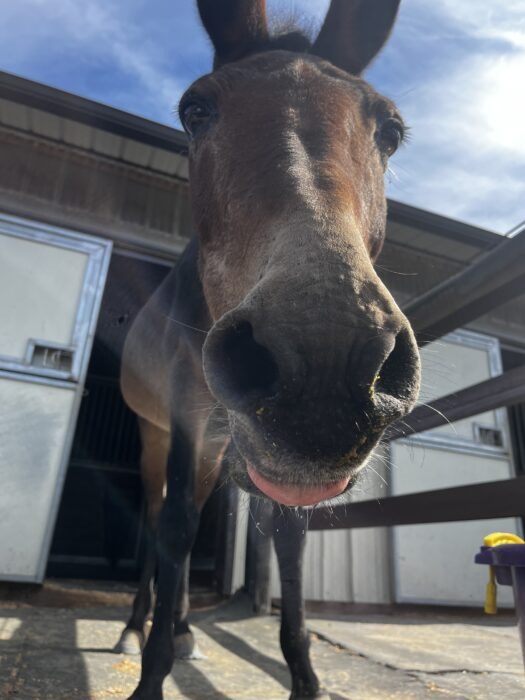
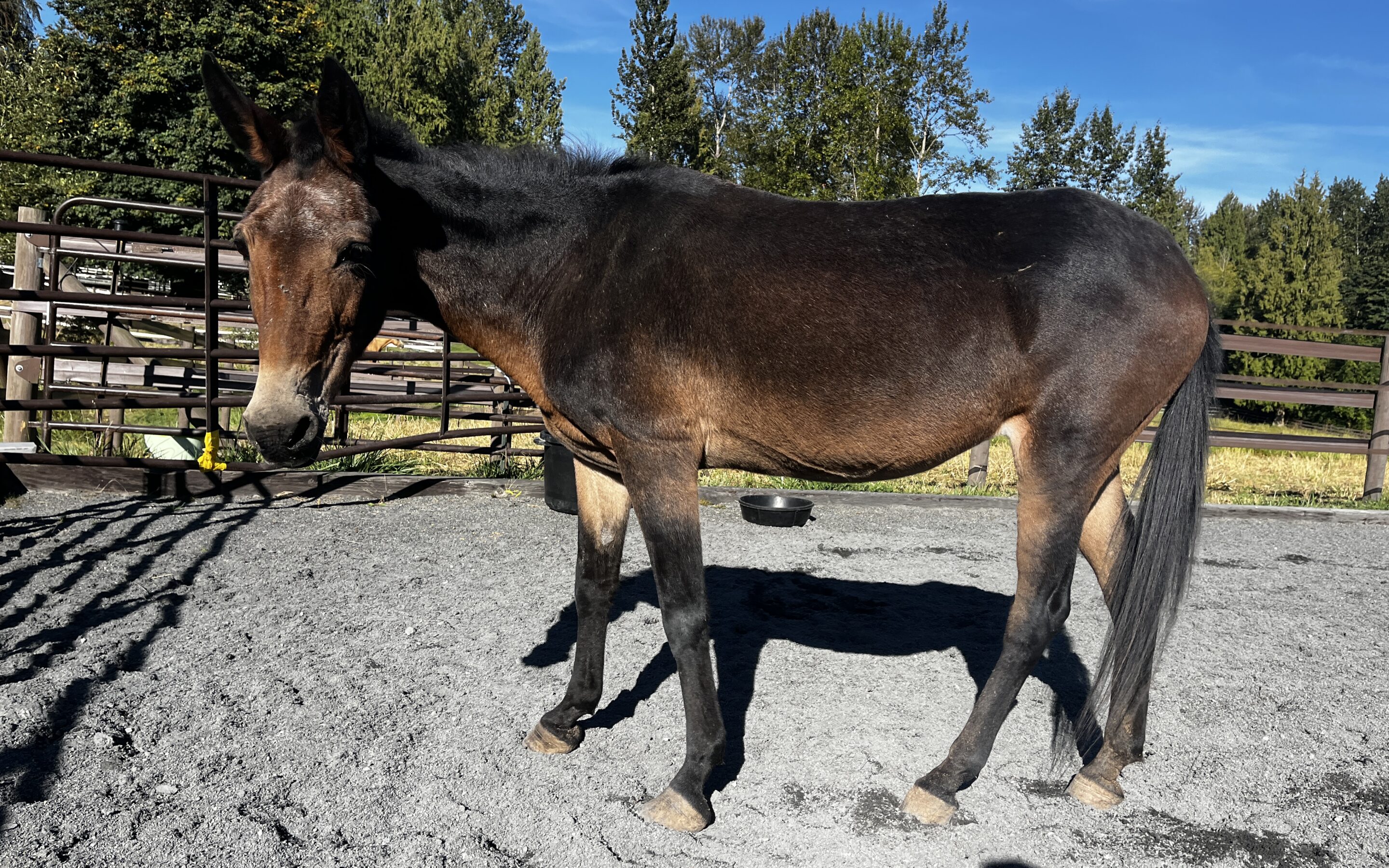
Wilma arrived at SAFE to a chorus of oohs and aahs — it’s not every day that we get to save a forgotten long-eared equine.
Our visual checks on intake clued us in to her most pressing care needs: long hooves, visible ribs. But it wasn’t until we offered her a welcome snack that we were made aware of what would become the focus of this story: her teeth.
You see, Wilma immediately quidded her hay. When a horse, er, sorry, equine, quids, it means they are not able to fully chew their food, resulting in compacted hay balls. If you’re lucky, they leave these balls behind, like little wet easter eggs where the surprise inside is only more wet hay. But if you’re unlucky, they swallow this half-chewed mass, and if you know anything about equine anatomy, any kind of blockage doesn’t often pass without a fight.
So, much to Wilma’s dismay, we put her on a mash-only diet, effective immediately. Much to our dismay, Wilma told us, in no uncertain terms, that her tastes were particular and picky, and she would not be satisfied with the simple feeding program we had cooked up for her. No, Wilma wanted variety. She wanted texture. And so for the first several days after her arrival, we troubleshooted — different kinds of grain, different ratios of water. We are wholly opposed to feeding dry pellets at SAFE (foreshadowing…), but when the sweet mule lady is braying sadly at you and turning her nose up time and again at your nice, fluffy mashes, you think: “well, maybe if we just add a liiiitle bit of water…”
Cue our fabulous, eagle-eyed night check volunteers ringing us up. Wilma’s standing in her stall, green gunk coming out of her nose. The partial mash had been more partial than mash, and Wilma had managed to take too big a bite. Luckily our vet was quick on the scene, and despite some antics Wilma inherited from her donkey side (the good ole “I’m outta here” move… iykyk), she allowed us to help her pass the choke. Unfortunately, she had aspirated a bit of that food, which means for the past week we have been keeping a very close eye on our sweet new friend, administering antibiotics and keeping close track of her vitals twice a day.
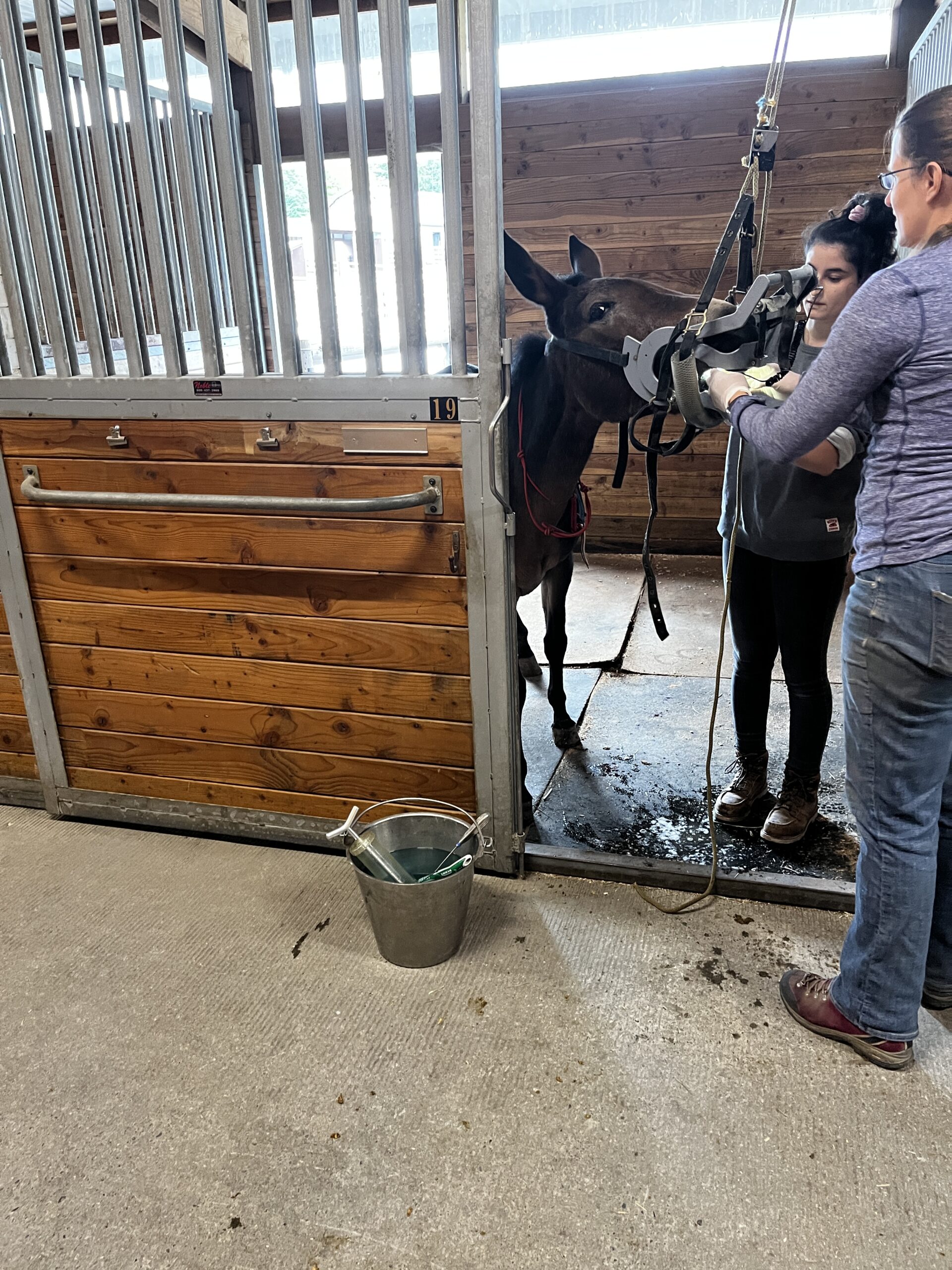
Fortunately, Wilma has been on the mend, and her appetite has been returning as well, even for the mashes she was once turning her nose up at. This progress also meant that we were able to have her seen for a dental float to get an idea of what is going on under the hood.
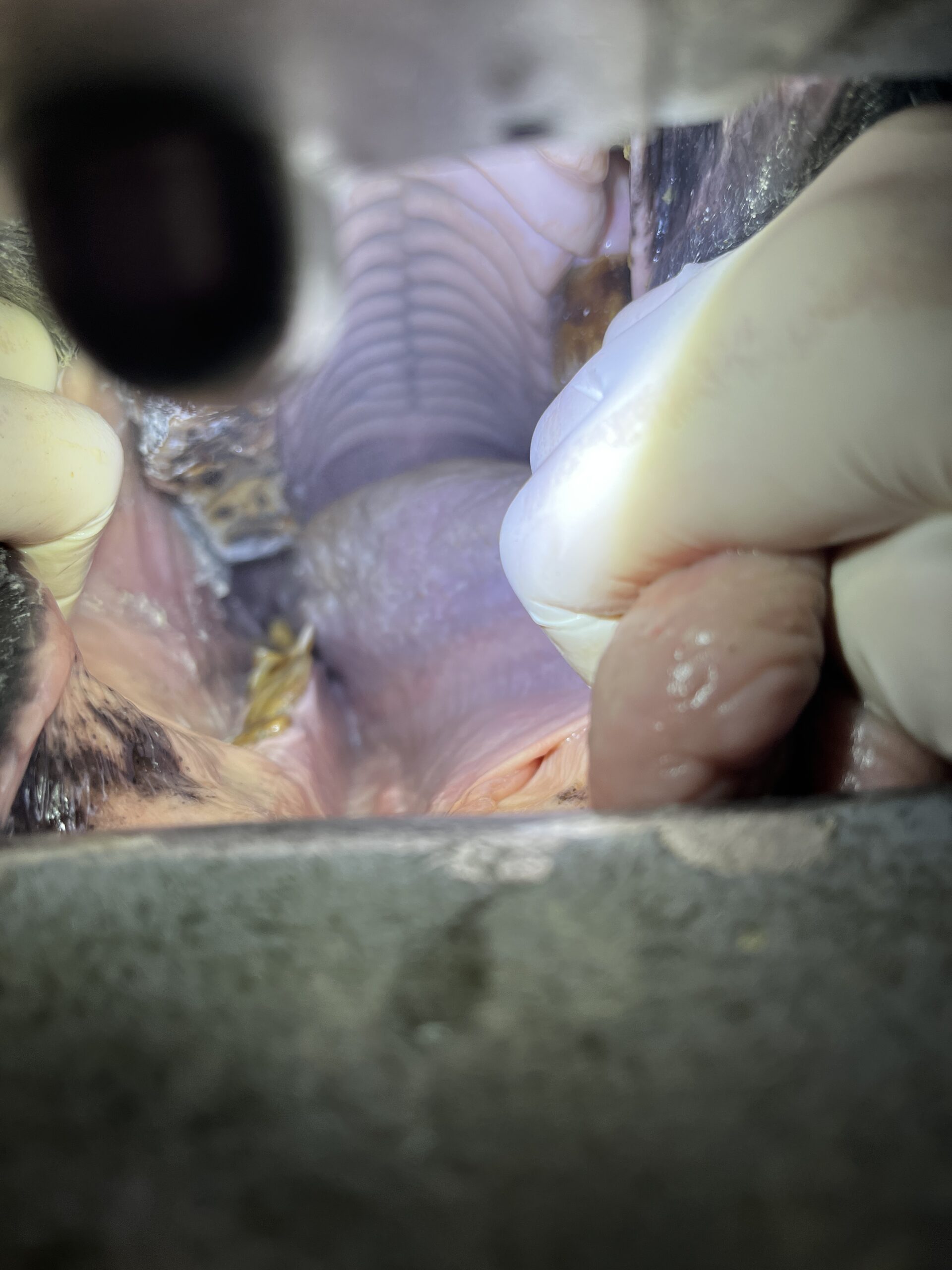
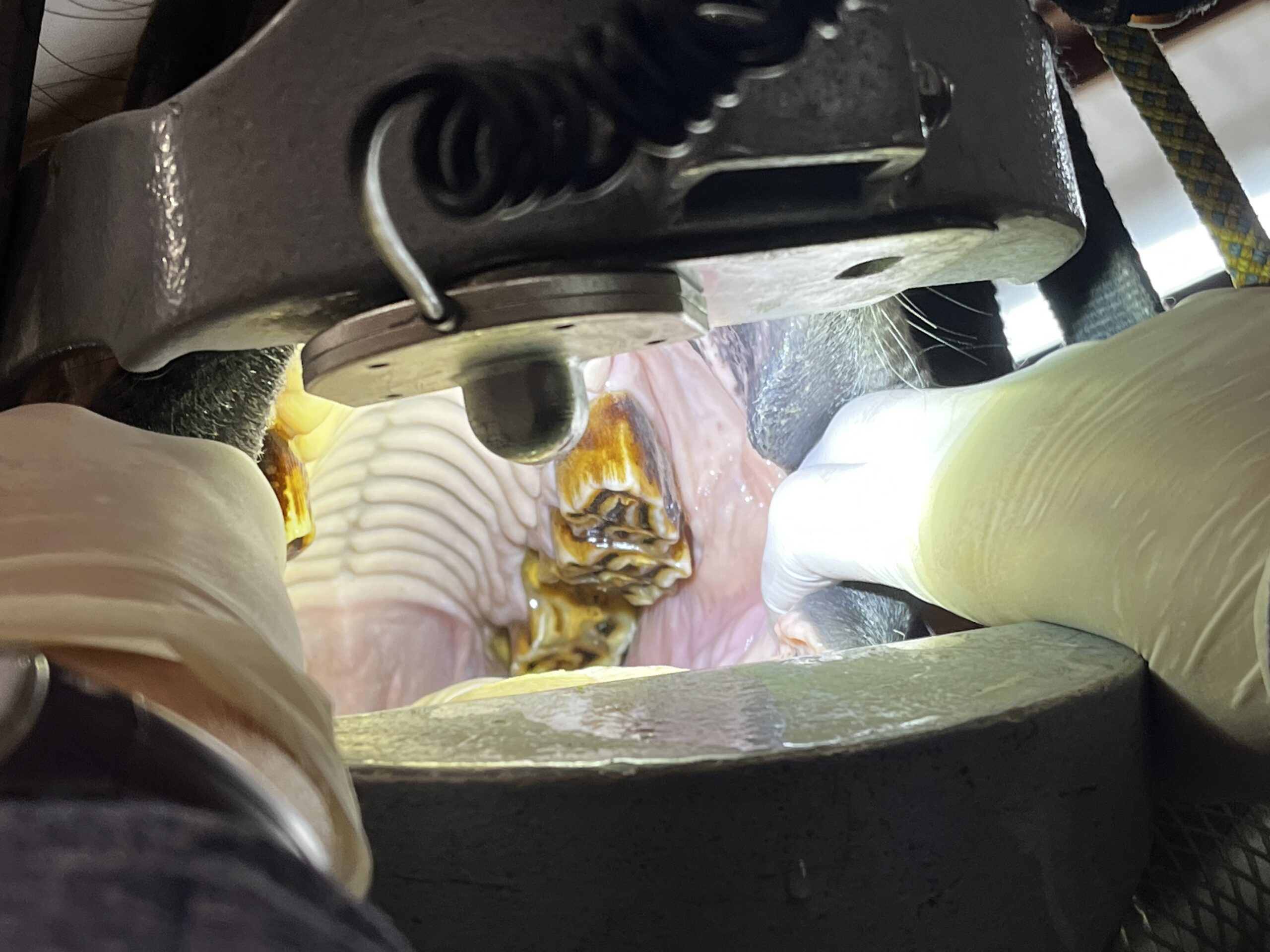
Wilma had a severe wave mouth, one that could put the biggest swells in Hawaii to shame. In addition, her bottom molars were worn almost completely down. Though our vet was able to restore some of her grinding surface, it is not up for debate: Wilma will need an all mash diet for the rest of her life.
Luckily, she has landed on a grain she seems to like (knocking on wood as these words are written), and she is still allowed to enjoy some very short grass grazing, which is bringing her a lot of joy. You know what’s bringing us joy? getting to take care of this special little lady.