
Much of our work here at SAFE involves flexibility and the ability to pivot. A tree comes down in the night and wipes the to-do list of everything but fixing fence. A call from animal control has us playing musical paddocks to make room for new arrivals. Unexpected snow in the forecast means prepping additional stalls and planning an arena turnout schedule. While we often make plans for our days, it is a rare 24-hour period that passes without any alterations to the regularly scheduled programming.
It is the same way for the horses. Often, we have little to no information about who they were or what they did before they arrived, and while it is tempting to make assumptions based on age or temperament, we spend a good deal of time getting to know the horse before deciding what is an appropriate path for them. And sometimes, those pathways change.
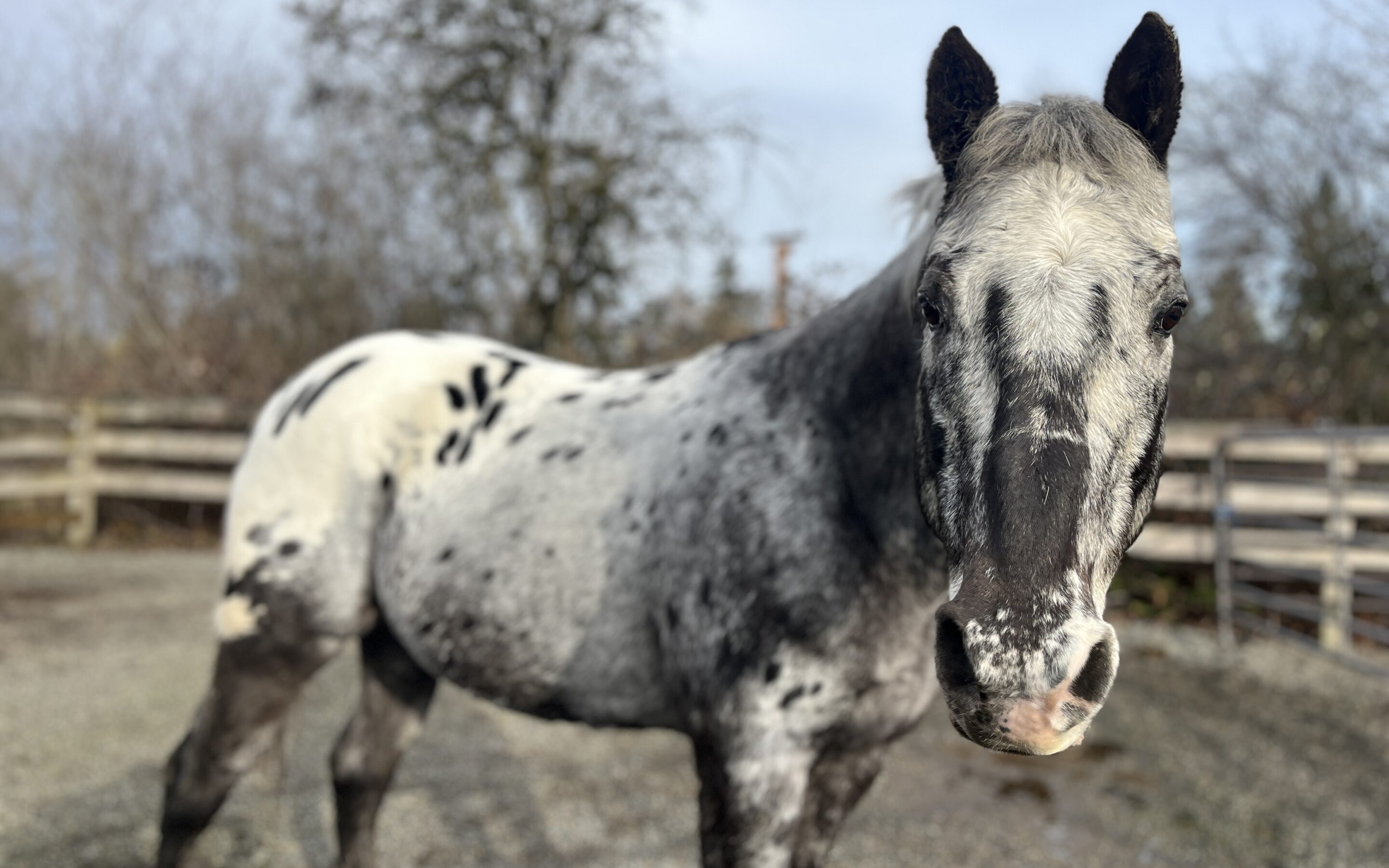
Ranger is a good example of this. He came to SAFE as a guy in his early 20s, and seeing as he was pleasant to be around and easy to handle on the ground, it might be fair to assume he’d been a riding horse in his past. But when we began to put him through the paces on the ground, we found that that likely was not the case. We took our time, and did eventually start Ranger under saddle. However, he told us pretty quickly that he wasn’t comfortable being ridden.
Given his age, his discomfort, and the fact that he is such a sweet guy on the ground, we pivoted, and decided to no longer ask Ranger to be a riding horse. It did not put his needs first to expect this of him, and ultimately was the best choice.
But that is not to say that Ranger doesn’t enjoy an enriching life. He is in regular work on the ground, and has something to teach both experienced and inexperienced people alike. Our volunteers love to spend time grooming him, and when he’s not hanging out with people he’s a star at playing gelding games with his good friend Brownie. As a companion, Ranger still has so much to offer, and we look forward to finding his forever home!
